
Find and stop real phishing attacks
Exaforce intelligently triages and investigates phishing incidents, cutting through the noise to instantly highlight credible threats with the full context.
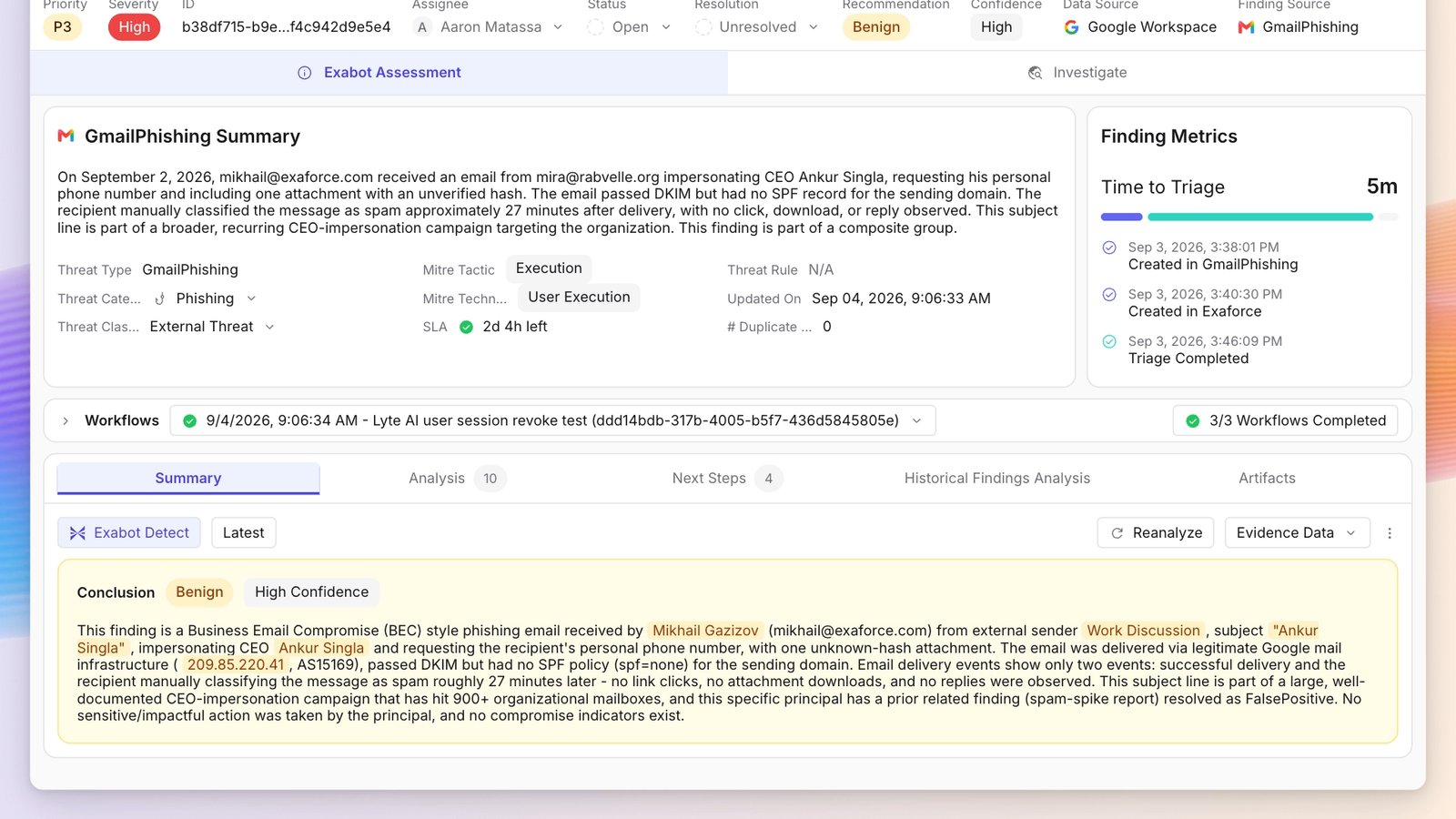
Challenges with email security
Analyst overload from phishing alerts
Security teams face a constant flood of reported phishing emails, overwhelming analysts with repetitive investigations that slow response times and increase burnout.
Increased sophistication of attacks
AI-driven attackers are crafting increasingly complex campaigns with malicious links, weaponized attachments, and spoofed senders that evade traditional gateways and directly target users.
Unclear blast radius and impact
Security teams often struggle to determine the full scope of a reported phishing event, including which users were affected, what access they had, which systems were involved, and what data may be at risk.
Fragmented investigations
Validating a phishing alert frequently requires correlating email signals with endpoint detections, SaaS activity, and identity logs, forcing analysts to pivot across multiple systems instead of seeing the full picture in one place.
Exaforce instantly triages and accelerates phishing investigations
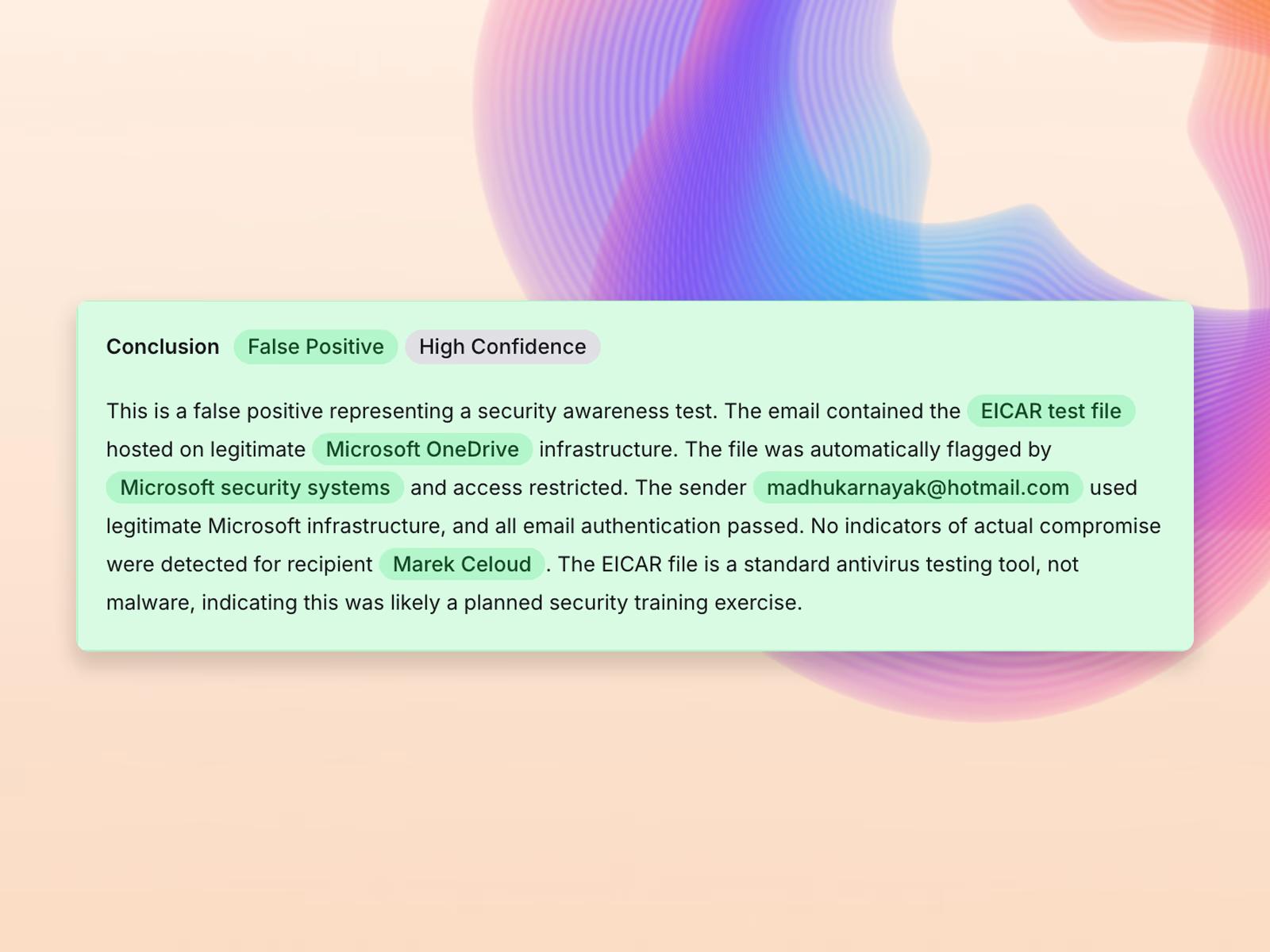
Reduced phishing overload
Exaforce reduces the manual burden by automatically triaging and enriching reported phishing alerts, cutting noise, and letting teams focus on the threats that matter.
Reduced phishing overload
Exaforce reduces the manual burden by automatically triaging and enriching reported phishing alerts, cutting noise, and letting teams focus on the threats that matter.

Stay ahead of evolving attacks
Exaforce ingests raw email logs, headers, and HTML to capture full click-path evidence, identify malicious URLs, and render embedded links so analysts can quickly confirm whether the emails are malicious or spoofed.
Stay ahead of evolving attacks
Exaforce ingests raw email logs, headers, and HTML to capture full click-path evidence, identify malicious URLs, and render embedded links so analysts can quickly confirm whether the emails are malicious or spoofed.
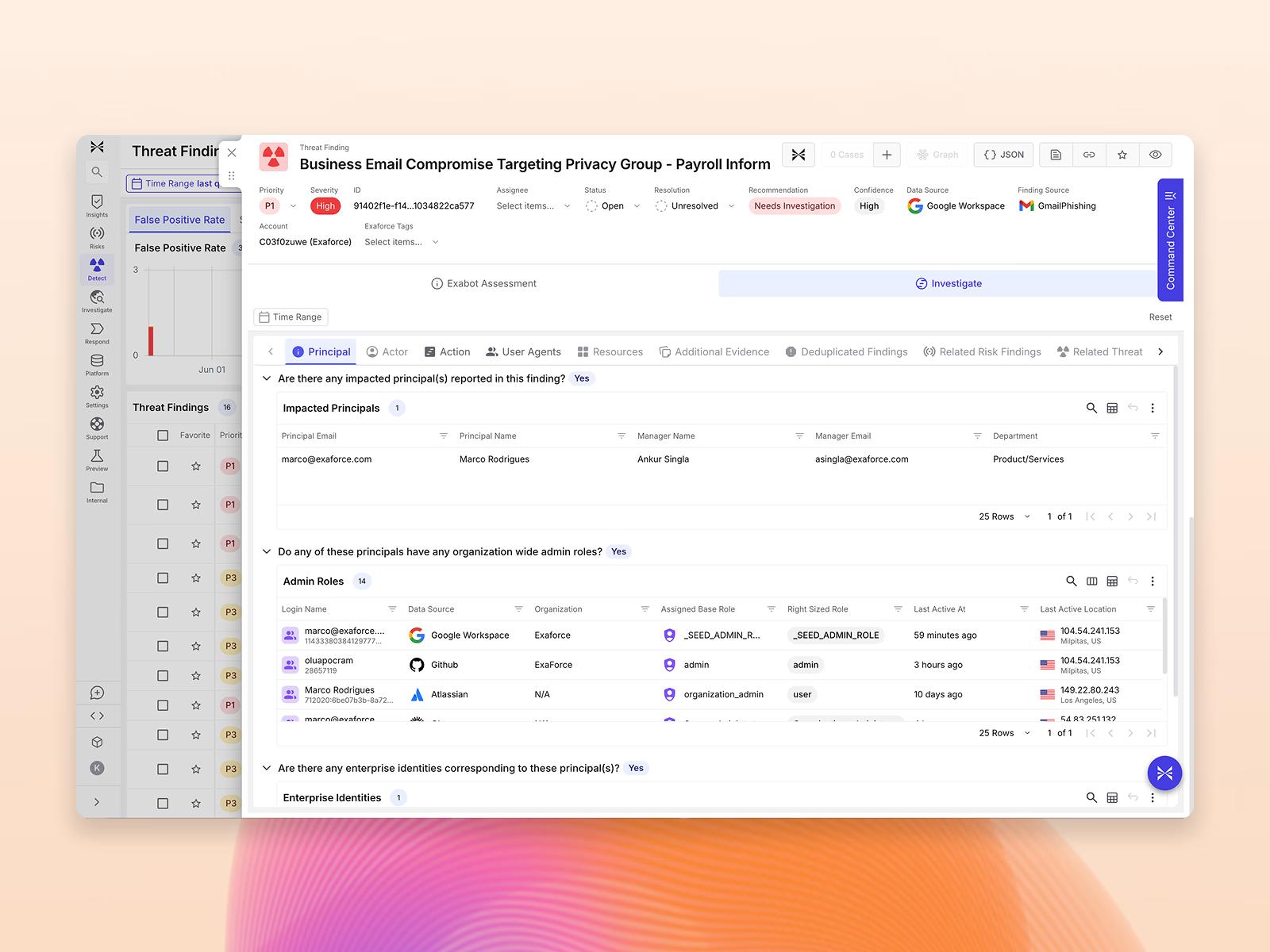
Automated impact analysis
Exaforce automatically traces other impacted users, user activity, access permissions, and data access to map the impact of a phishing event, giving analysts clear visibility into affected users, systems, and data.
Automated impact analysis
Exaforce automatically traces other impacted users, user activity, access permissions, and data access to map the impact of a phishing event, giving analysts clear visibility into affected users, systems, and data.
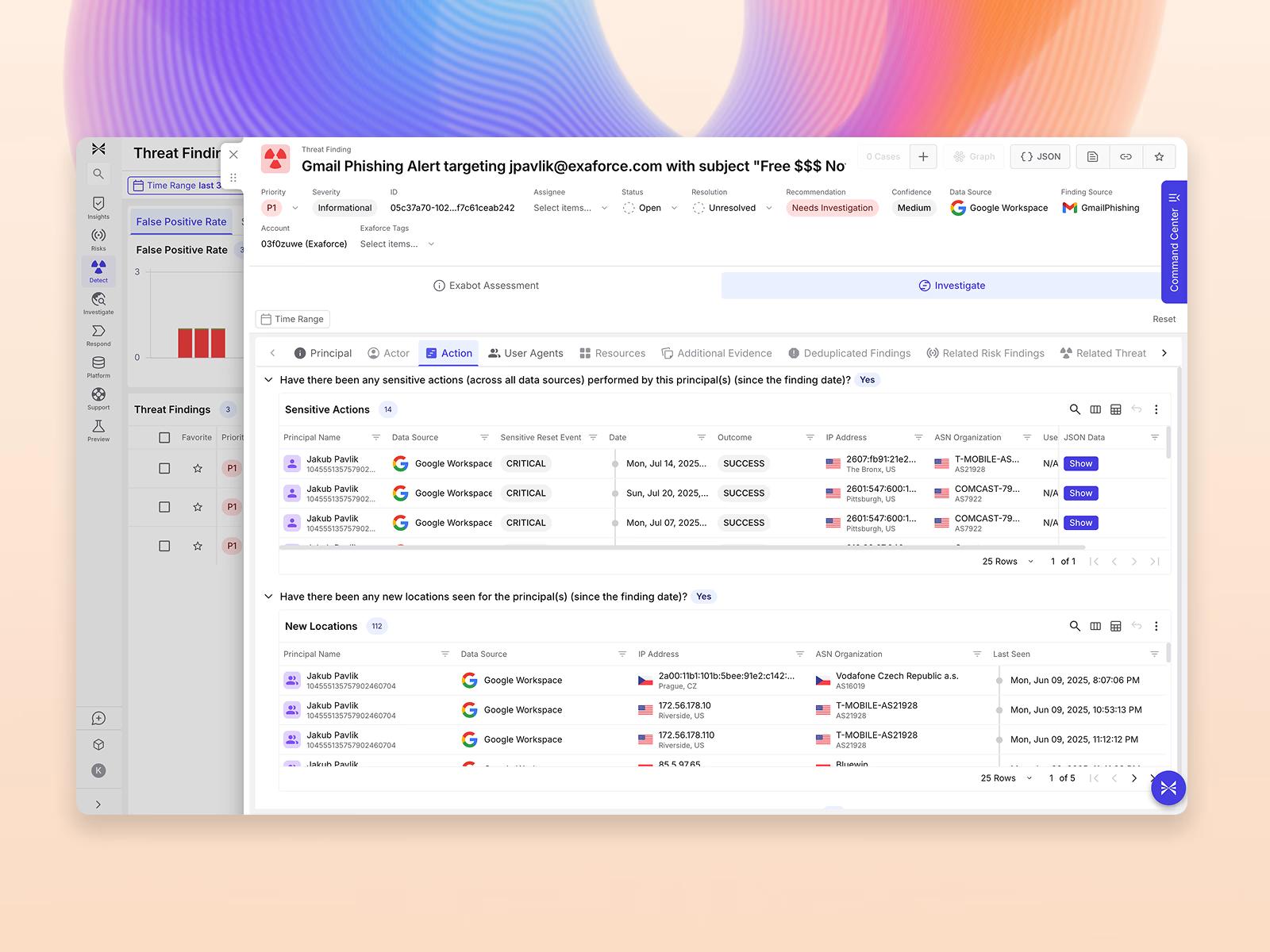
See the full attack path
Exaforce correlates email alerts with endpoint, SaaS, and identity signals into a unified investigation, eliminating tool-hopping and accelerating response.
See the full attack path
Exaforce correlates email alerts with endpoint, SaaS, and identity signals into a unified investigation, eliminating tool-hopping and accelerating response.
Fuze
GuardDuty alerts used to eat up hours of our team’s time. With Exaforce MDR, that dropped to almost zero. We’re not just getting alerts, we’re getting answers.

Co-Founder & CTO at Fuze
Frequently asked questions
Does Exaforce replace email security gateways?
How does Exaforce correlate email threats with activity across other systems?
How does Exaforce detect sophisticated phishing attacks that bypass email gateways?
How does Exaforce reduce the manual burden of phishing investigations?
Related resources

Evaluate your AI SOC initiative
A maturity mapped question framework to benchmark AI SOC platforms on detection, triage, investigation, response, and service quality.

Webinar: “What is AI SOC” Anyway?
Cutting through the hype with James Berthoty (CEO & Principal Analyst, Latio) and Taylor Smith (Director of Product, Exaforce)

Latio AI Security Market Report 2025
Get actionable insights about the latest developments in AI security. Written for both security leaders and engineers, this report covers the state of the market, leading use cases, and what vendor innovations.