
Turn EDR noise into actionable intelligence
Harness AI to correlate endpoint alerts with device activity, user behavior, identity, and cloud logs to minimize false positives and surfacing high-fidelity insights.
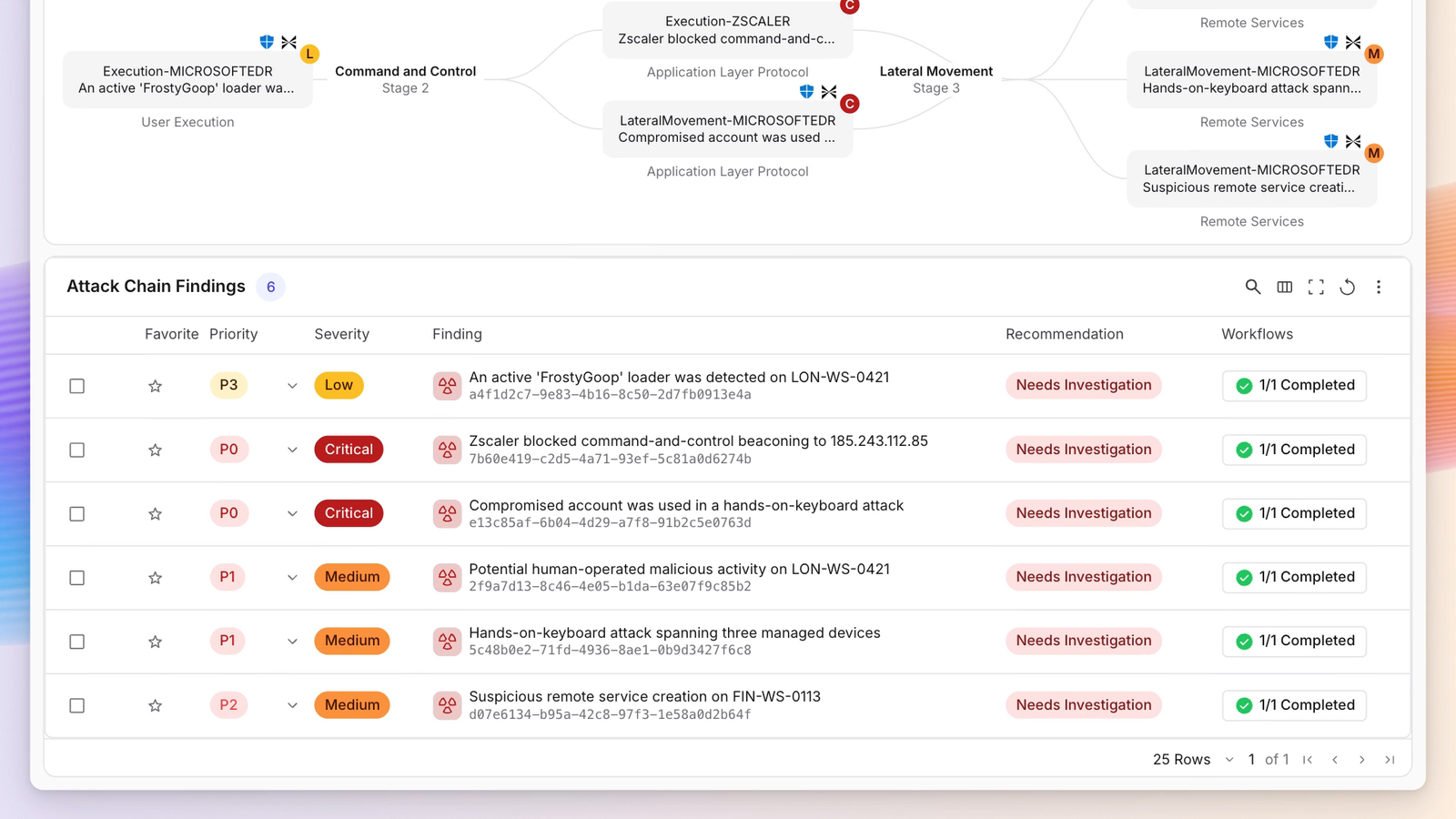
Challenges with endpoint detection
Alert overload
EDR solutions flood analysts with false positives from routine activities such as legitimate software installation, scripts and normal use of Windows utilities, burying real threats under thousands of benign alerts daily.
High false positives rates
Without understanding system behavior and cross-environment correlation, many alerts turn out to be benign, wasting precious cycles.
Context gaps beyond endpoint
Endpoint alerts alone can’t reveal how endpoint activity ties back to cloud, identity or SaaS exploits.
Slow, complex investigations
Manually stitching together endpoint logs, identity trails, and cloud events necessary to tell a full story, eats up analyst time.
Exaforce connects and contextualizes endpoint detections, accelerating the whole SOC lifecycle
Eliminate false positives
AI-powered triage instantly validates EDR alerts against actual system behavior and business context, filtering out routine IT operations to surface only genuine threats that require action.
Eliminate false positives
AI-powered triage instantly validates EDR alerts against actual system behavior and business context, filtering out routine IT operations to surface only genuine threats that require action.
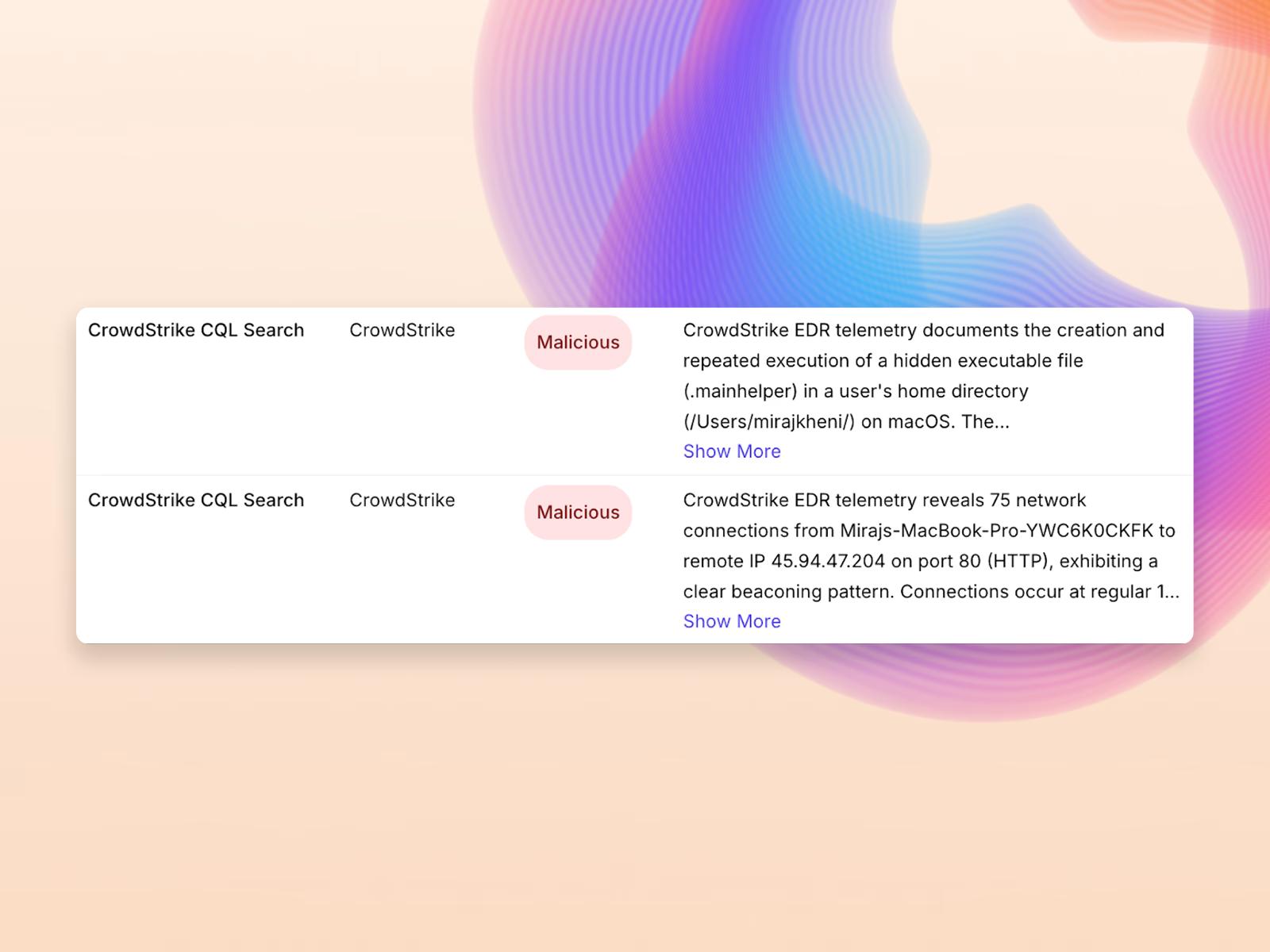
Enriched alerts with actionable context
Each alert is infused with correlated data from EDR queries, endpoint logs, threat intelligence data, and correlated evidence, transforming raw EDR events into actionable incidents with clear response steps.
Enriched alerts with actionable context
Each alert is infused with correlated data from EDR queries, endpoint logs, threat intelligence data, and correlated evidence, transforming raw EDR events into actionable incidents with clear response steps.
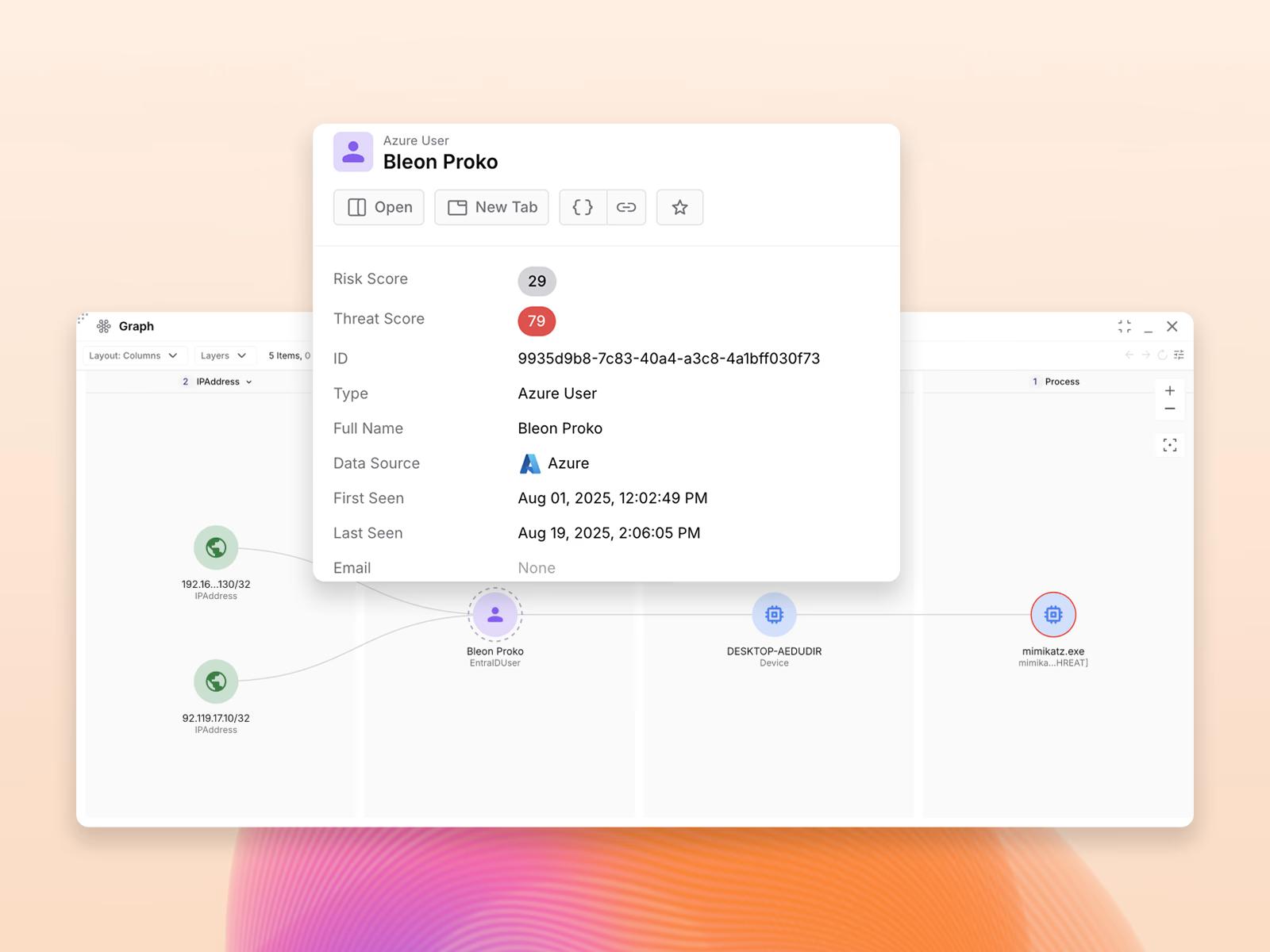
Cross-system correlated findings
Connects endpoint alerts to their cloud and identity impact, exposing the full kill chain from initial compromise through lateral movement to data exfiltration that endpoint-only tools can't see.
Cross-system correlated findings
Connects endpoint alerts to their cloud and identity impact, exposing the full kill chain from initial compromise through lateral movement to data exfiltration that endpoint-only tools can't see.
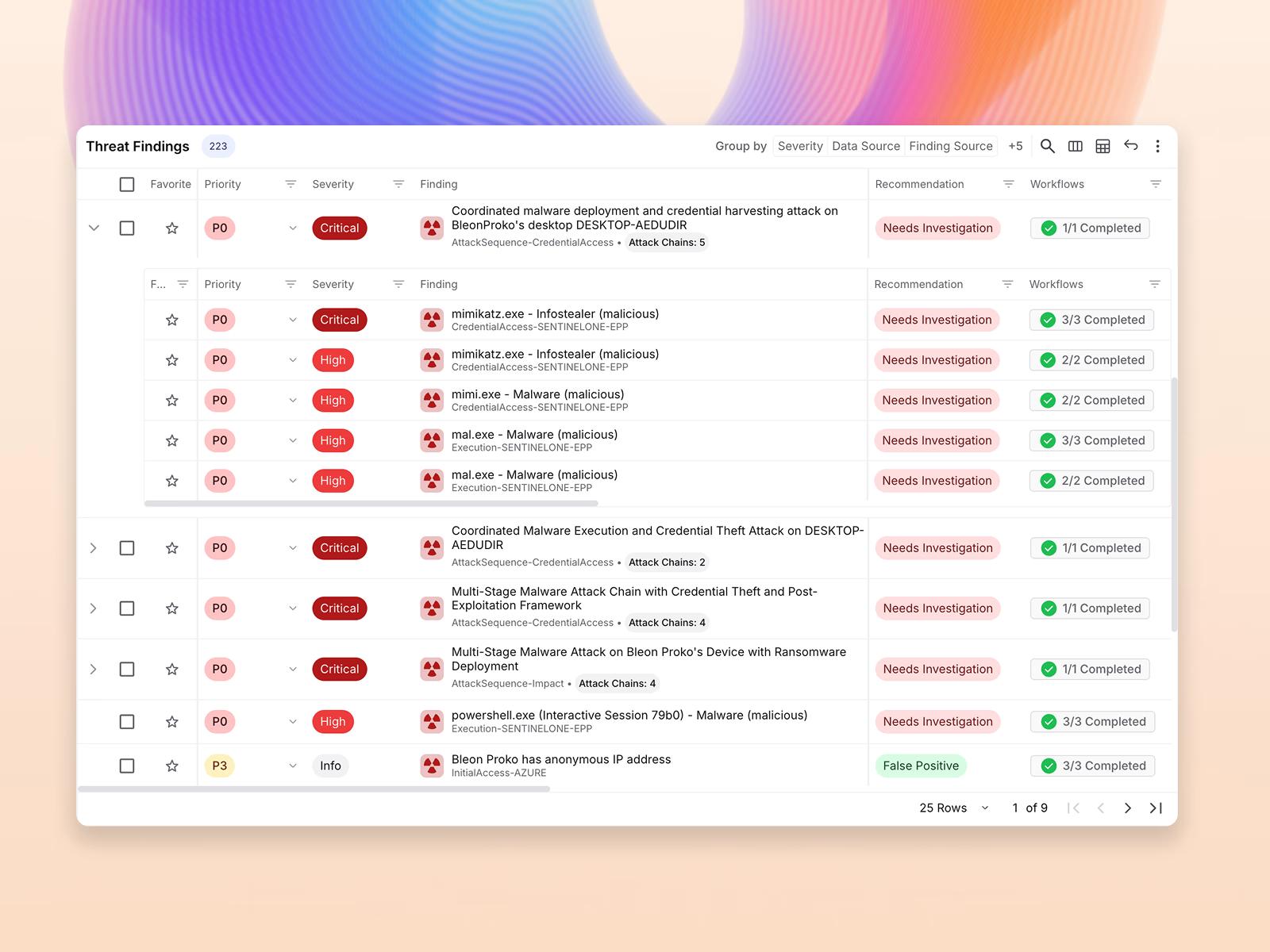
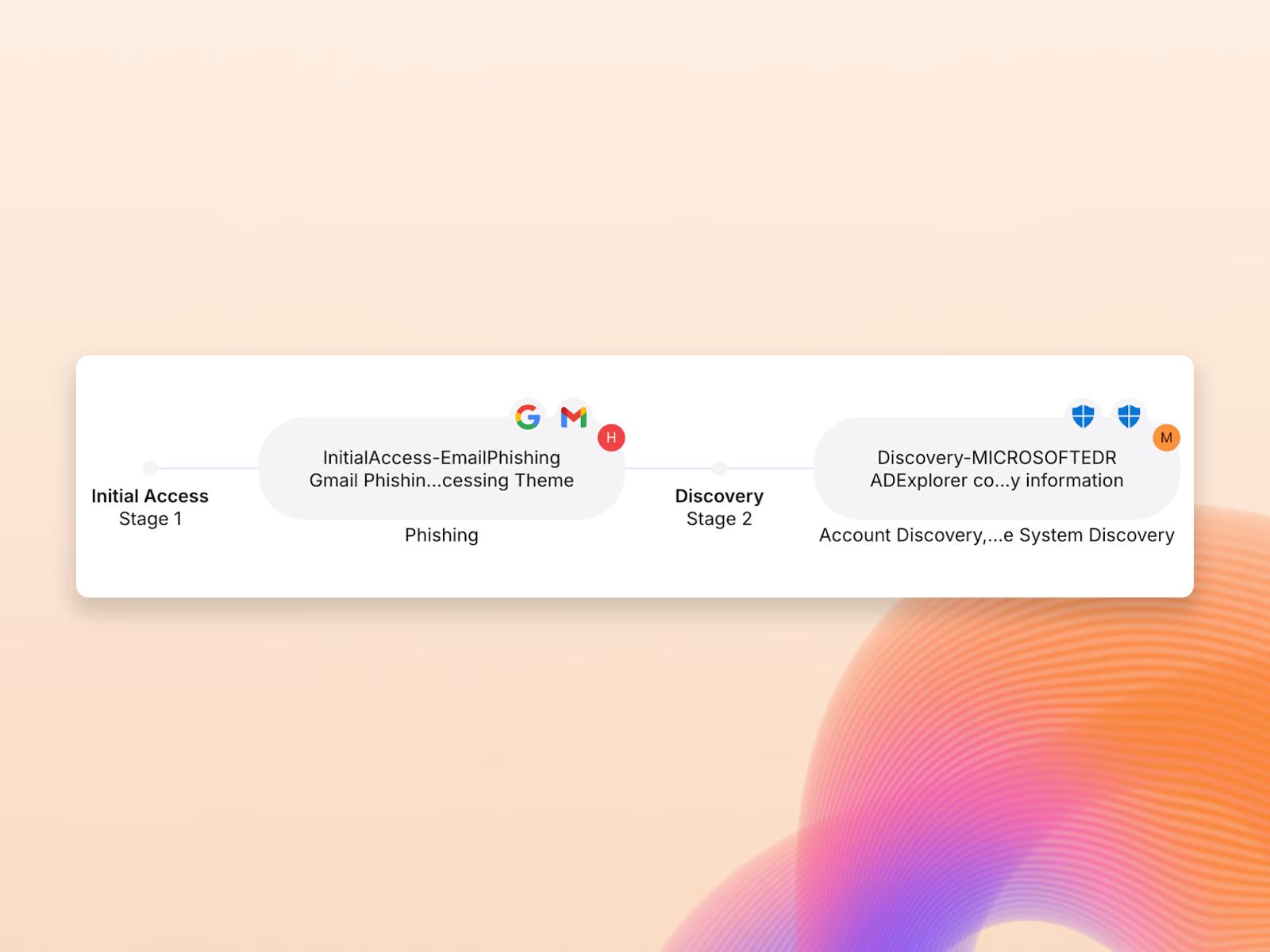
Accelerate investigations
Unifies endpoint, cloud, and identity telemetry into a single attack timeline, reducing investigation time from hours to minutes with automatic evidence correlation and visual attack mapping.
Accelerate investigations
Unifies endpoint, cloud, and identity telemetry into a single attack timeline, reducing investigation time from hours to minutes with automatic evidence correlation and visual attack mapping.
Fuze
GuardDuty alerts used to eat up hours of our team’s time. With Exaforce MDR, that dropped to almost zero. We’re not just getting alerts, we’re getting answers.

Co-Founder & CTO at Fuze
Frequently asked questions
How does Exaforce accelerate endpoint investigations?
How does Exaforce reduce false positives from EDR alerts?
What does "enriched alerts" mean for endpoint security?
What does “enriched alerts” mean for endpoint security?
Related resources

Evaluate your AI SOC initiative
A maturity mapped question framework to benchmark AI SOC platforms on detection, triage, investigation, response, and service quality.

Webinar: “What is AI SOC” Anyway?
Cutting through the hype with James Berthoty (CEO & Principal Analyst, Latio) and Taylor Smith (Director of Product, Exaforce)
Latio AI Security Market Report 2025
Get actionable insights about the latest developments in AI security. Written for both security leaders and engineers, this report covers the state of the market, leading use cases, and what vendor innovations.