
Stop SaaS data breaches
Comprehensive SaaS threat protection spots both standalone risks and cross-system attack patterns while AI-driven false-positive filtering cuts through the noise so you can focus on real threats.
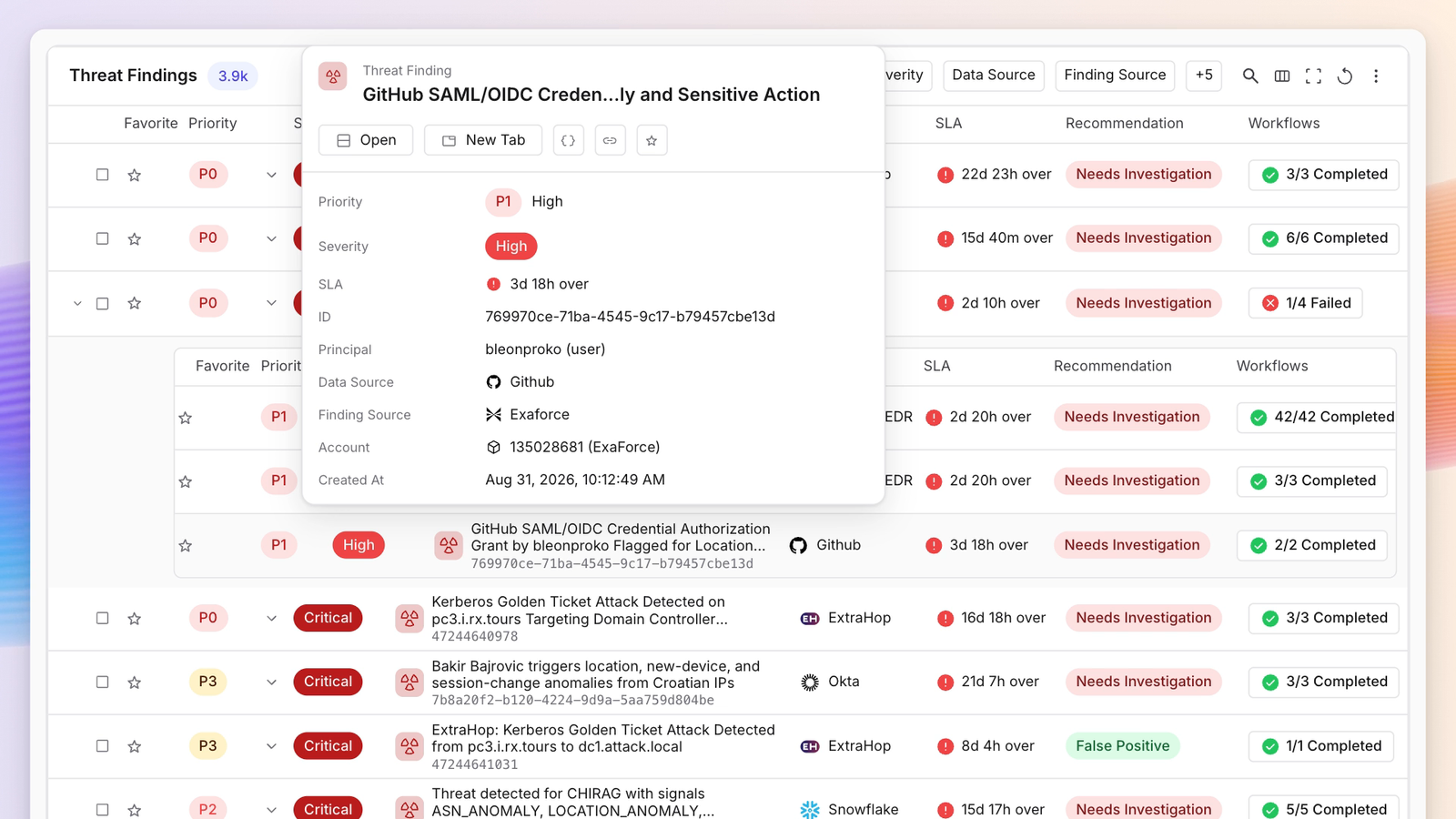
Challenges with SaaS security
Gaps in detection coverage
Critical SaaS applications such as GWS, GitHub, OpenAI, and Jira remain under-monitored, leaving blind spots where attackers can access some of your company’s most sensitive data.
Limited visibility into user actions
Most teams can’t answer who did what, when, and where across SaaS and IdP managed environments, slowing investigations, insider threat detection, and threat hunting.
Compliance gaps in SaaS environments
Default SaaS controls often fall short of audit and regulatory requirements, whether it’s limited log retention or missing policy enforcement, leaving organizations exposed to compliance risk.
Risky misconfigurations and poor hygiene
Weak or missing MFA, missing security controls, excessive permissions, and other misconfigurations create an open door for attackers and make enforcing consistent SaaS security hygiene difficult.
Exaforce connects the dots across SaaS, exposing real risks instantly
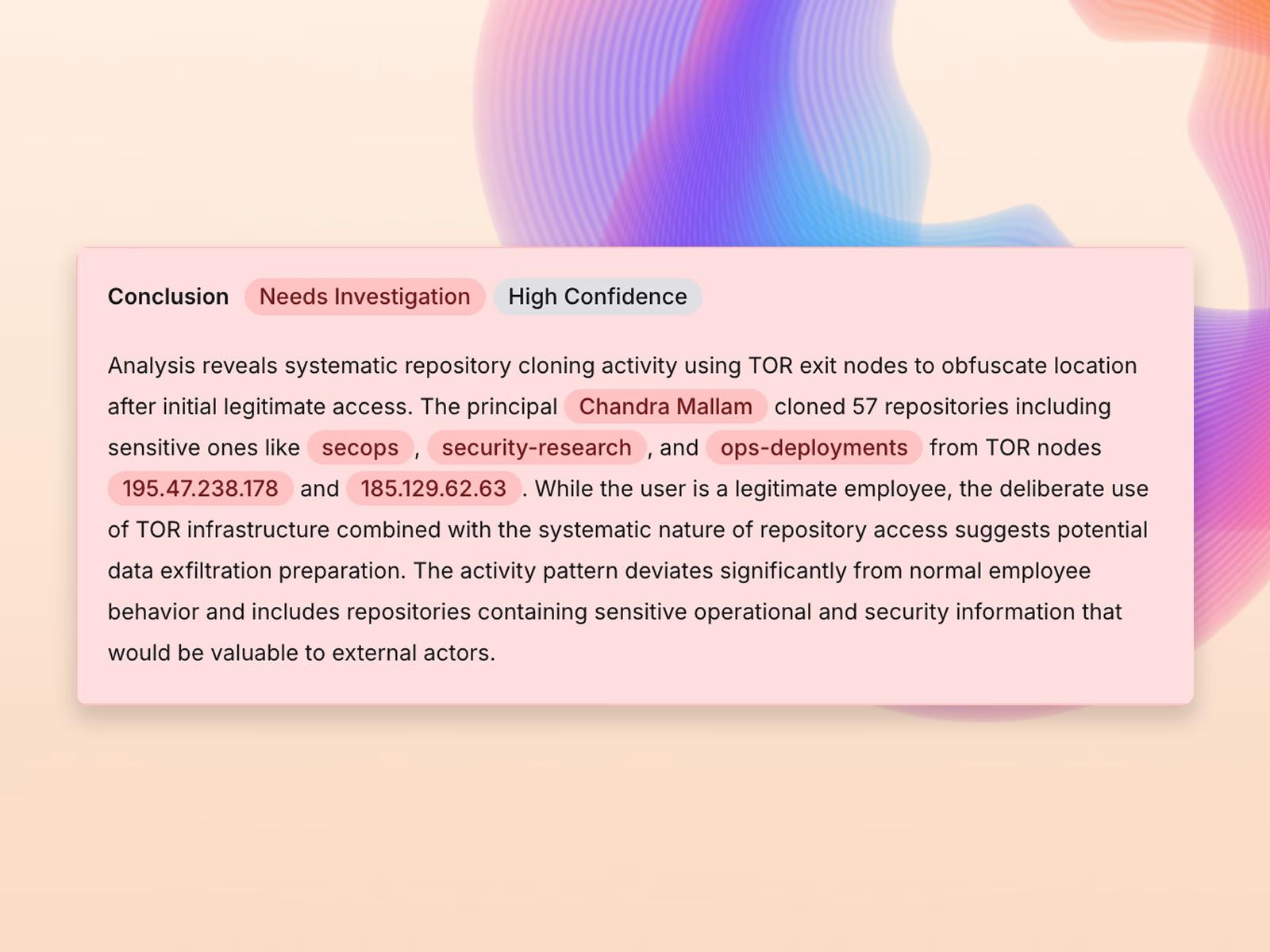
Comprehensive SaaS coverage
Exaforce monitors collaboration, version control systems, and other critical apps with ML-based detections, closing blind spots where sensitive data could be exposed.
Comprehensive SaaS coverage
Exaforce monitors collaboration, version control systems, and other critical apps with ML-based detections, closing blind spots where sensitive data could be exposed.
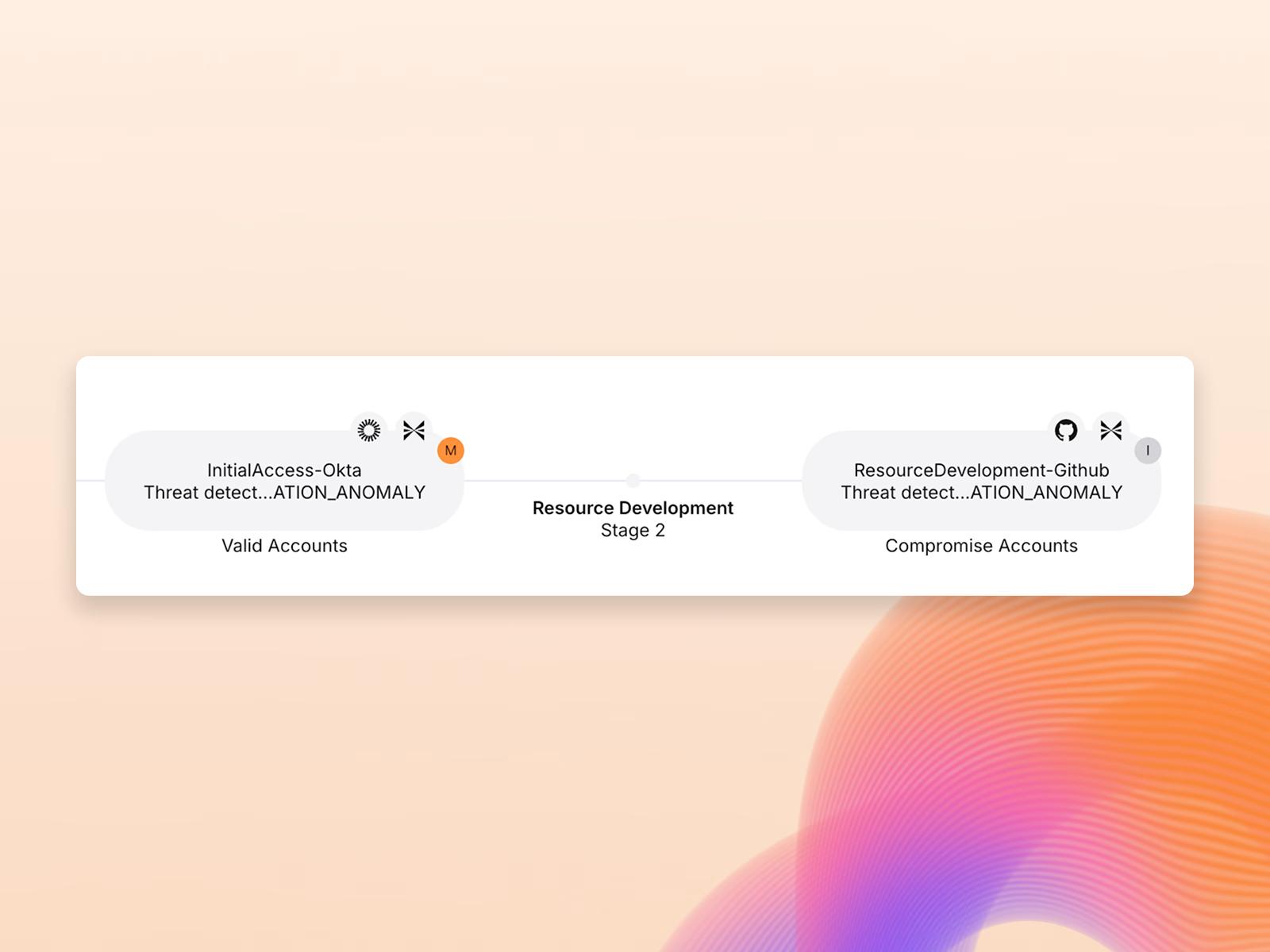
Full user action visibility
Exaforce tracks every action across SaaS environments and stitches related events together across systems, creating clear timelines that accelerate investigations and insider threat detection.
Full user action visibility
Exaforce tracks every action across SaaS environments and stitches related events together across systems, creating clear timelines that accelerate investigations and insider threat detection.
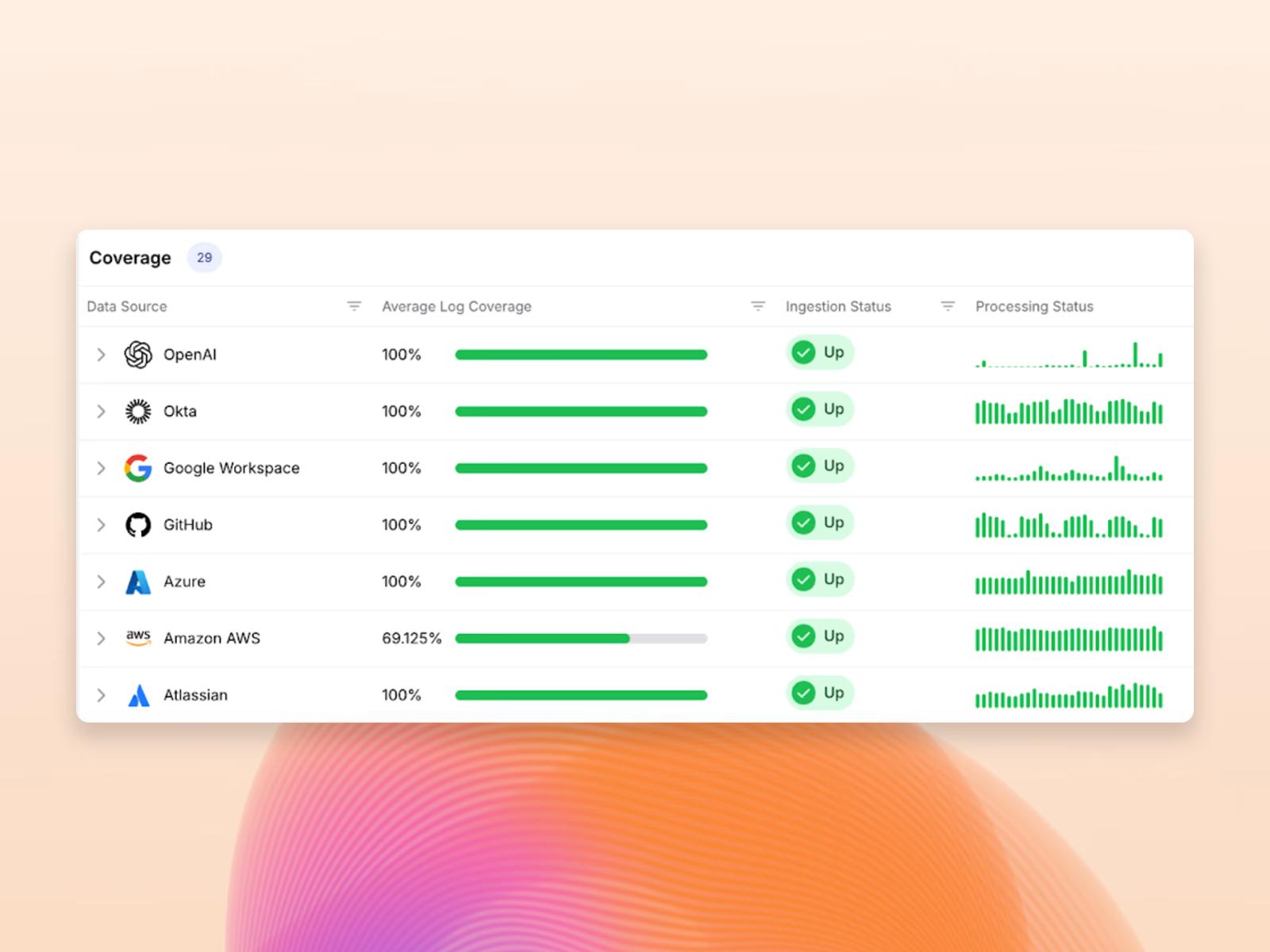
Built-in compliance coverage
Exaforce helps organizations meet compliance requirements across SaaS environments with extended log retention and continuous checks against configuration requirements.
Built-in compliance coverage
Exaforce helps organizations meet compliance requirements across SaaS environments with extended log retention and continuous checks against configuration requirements.
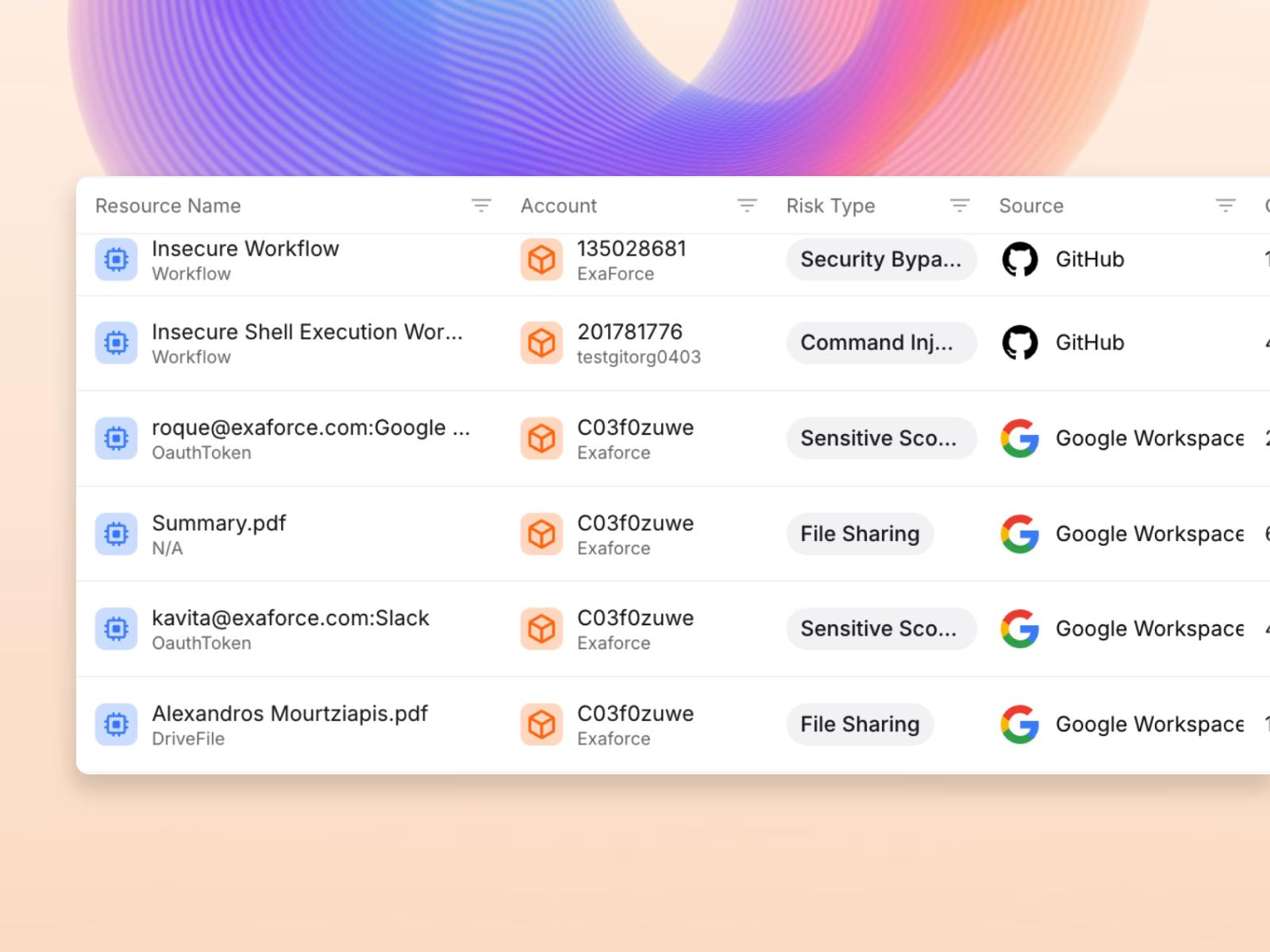
Continuous configuration assurance
Exaforce automatically detects weak controls and configurations like public exposures, missing MFA, or excessive permissions, guiding remediation to enforce strong SaaS hygiene.
Continuous configuration assurance
Exaforce automatically detects weak controls and configurations like public exposures, missing MFA, or excessive permissions, guiding remediation to enforce strong SaaS hygiene.
Automation Anywhere
Exaforce has transformed our SOC operations by filling critical gaps—especially in detection and response for our SaaS tools, where native capabilities fall short. Investigation times have been cut by 50% thanks to their agentic workflows that automate routine tasks like user confirmation, enabling our team to focus on strategic threats.

Engineering & Operations Leader at Automation Anywhere
Frequently asked questions
How does Exaforce detect SaaS threats that span multiple applications?
How does Exaforce help with SaaS compliance requirements?
What types of SaaS security misconfigurations does Exaforce detect?
Related resources

Evaluate your AI SOC initiative
A maturity mapped question framework to benchmark AI SOC platforms on detection, triage, investigation, response, and service quality.

Webinar: “What is AI SOC” Anyway?
Cutting through the hype with James Berthoty (CEO & Principal Analyst, Latio) and Taylor Smith (Director of Product, Exaforce)
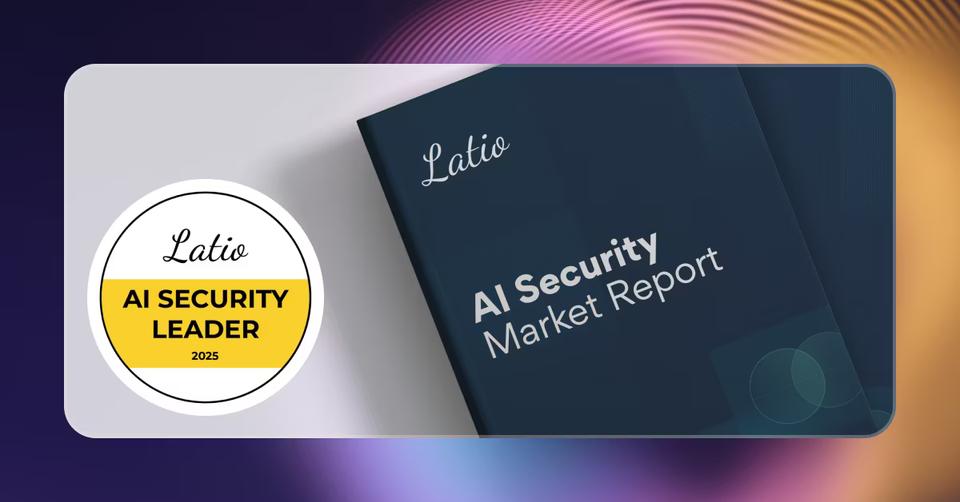
Latio AI Security Market Report 2025
Get actionable insights about the latest developments in AI security. Written for both security leaders and engineers, this report covers the state of the market, leading use cases, and what vendor innovations.