
Accurately prevent insider threats
Agentic AI that delivers 360° insight into user actions and access paths, highlighting critical insider threats while suppressing false positives.
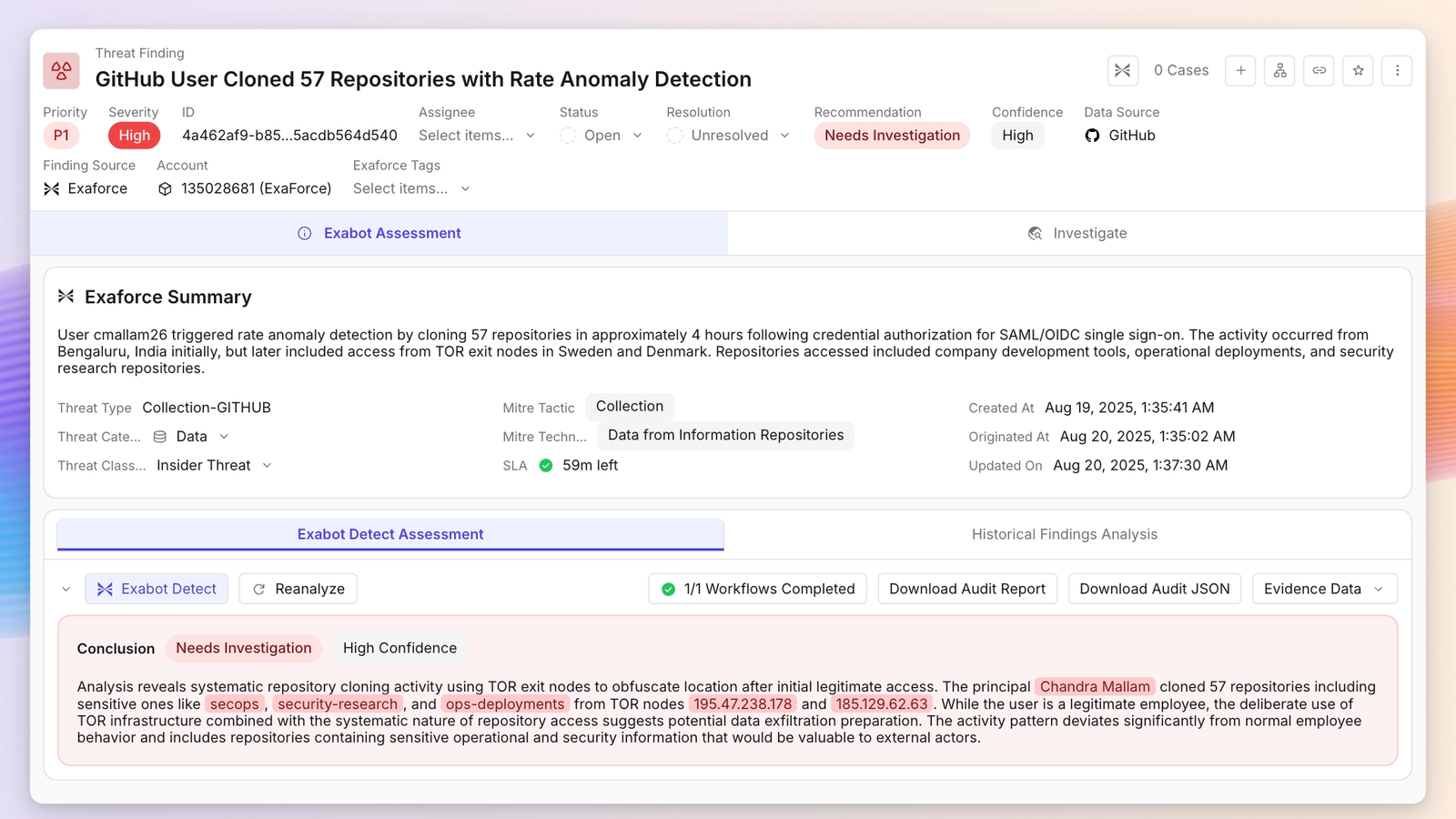
Challenges with insider threats
Too many alerts with little value
Existing tools and services fail to understand business context and adapt to a remote first and cloud first company, creating noisy alerts for common user behaviors, overwhelming analysts.
Frequently missed threat signals
Rule-based and UEBA systems fail to detect subtle, multi-step insider activity, especially across cloud apps, roles, and data stores.
Fragmented investigations
Logs, permissions, HR related information live in separate silos, forcing analysts to piece together the attack narrative of an insider threat from scratch.
Slow response gaps
Actions like revoking access, rotating keys and documenting steps require manual console work, giving malicious insiders time to move, escalate, or cover their tracks.
Exaforce makes insider threats visible with full context and fewer false alarms.
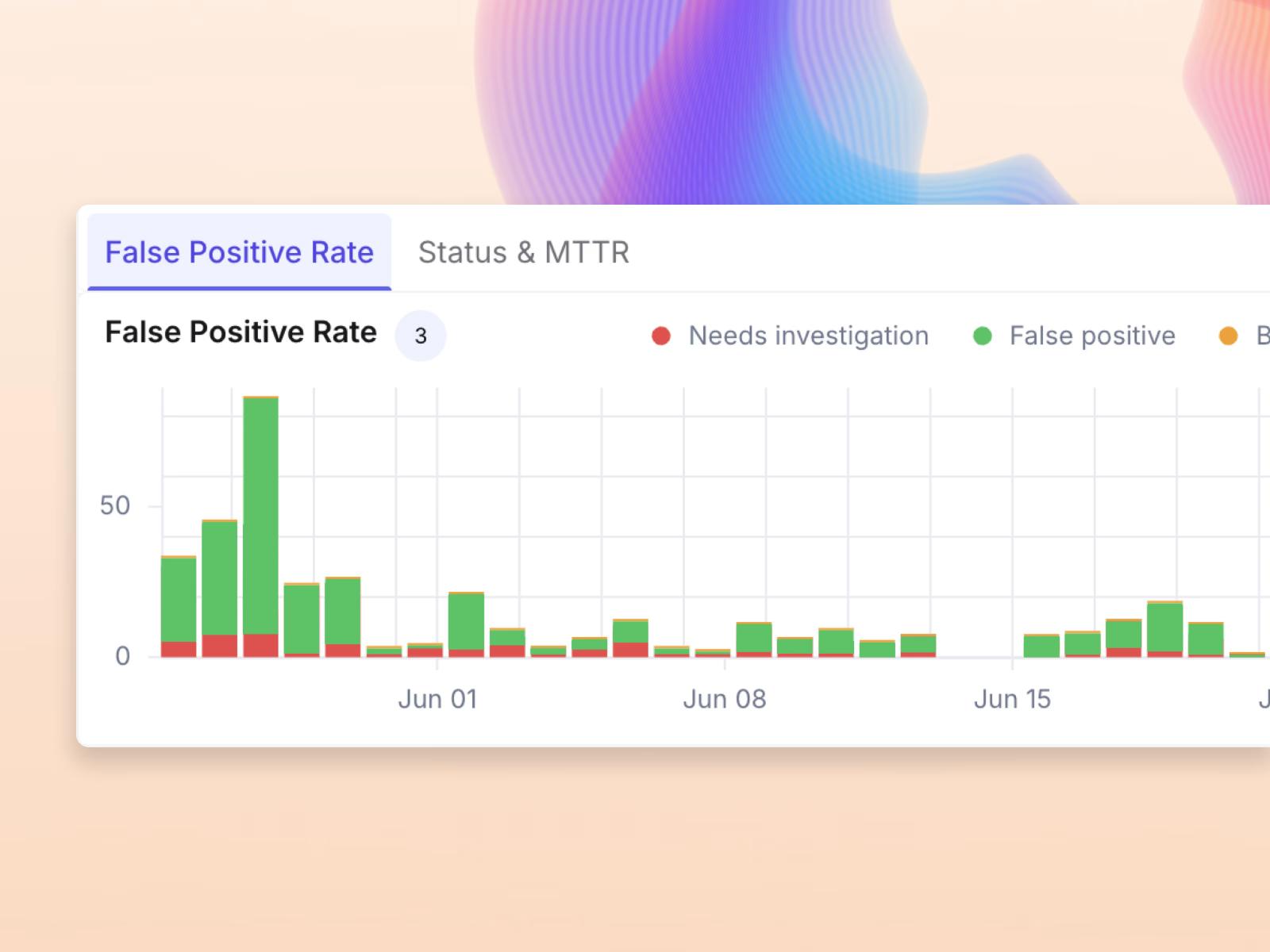
Fewer false positives, more real findings
Exabots learn your organization's normal work patterns to eliminate false positives from legitimate business activities, reducing alert noise while preserving genuine insider threats.
Fewer false positives, more real findings
Exabots learn your organization's normal work patterns to eliminate false positives from legitimate business activities, reducing alert noise while preserving genuine insider threats.
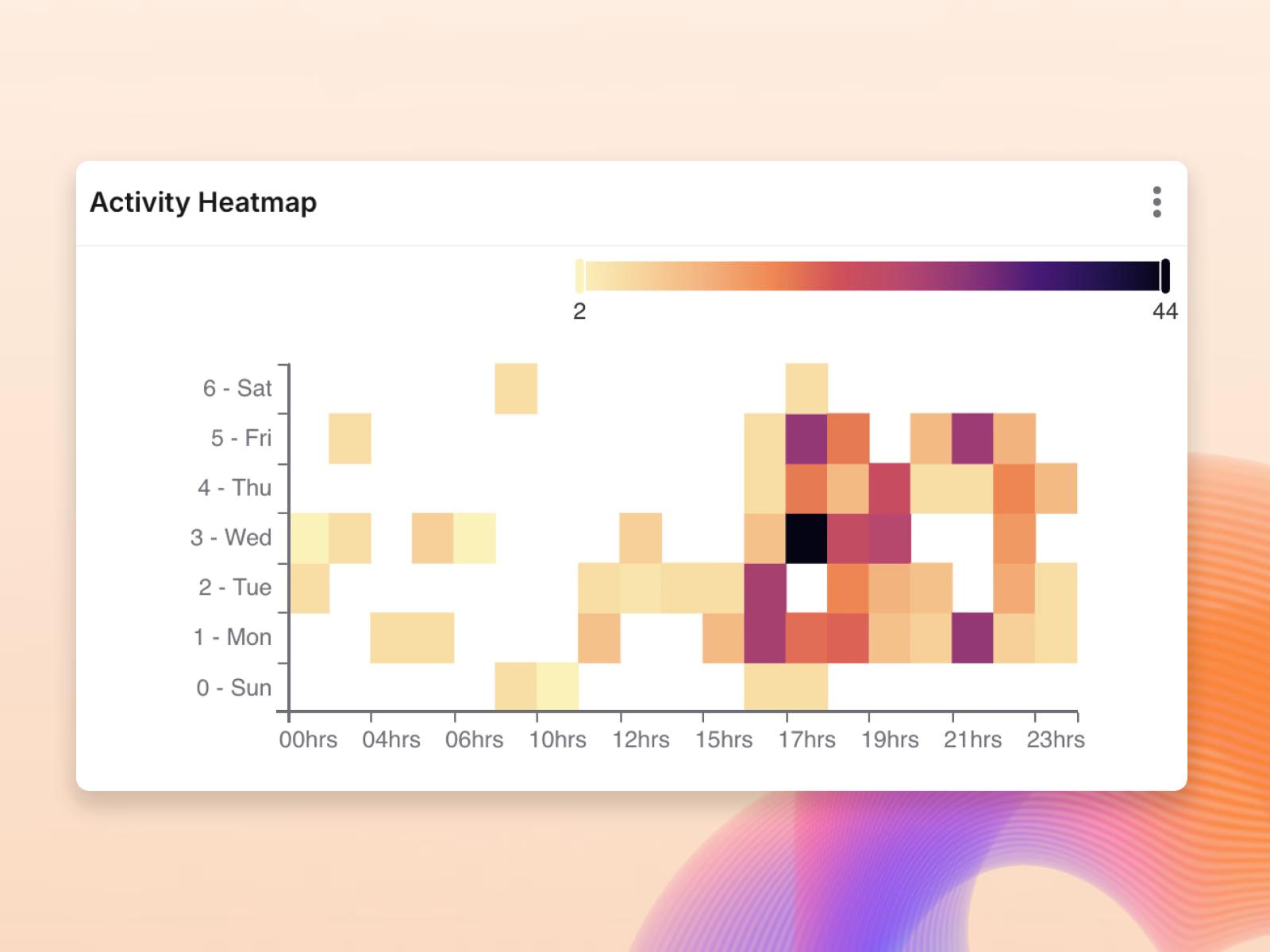
Detects subtle insider behaviors
Anomaly detection blends time of day, peer group baselines, business context, and watchlists, highlighting when sensitive actions actually matter.
Detects subtle insider behaviors
Anomaly detection blends time of day, peer group baselines, business context, and watchlists, highlighting when sensitive actions actually matter.
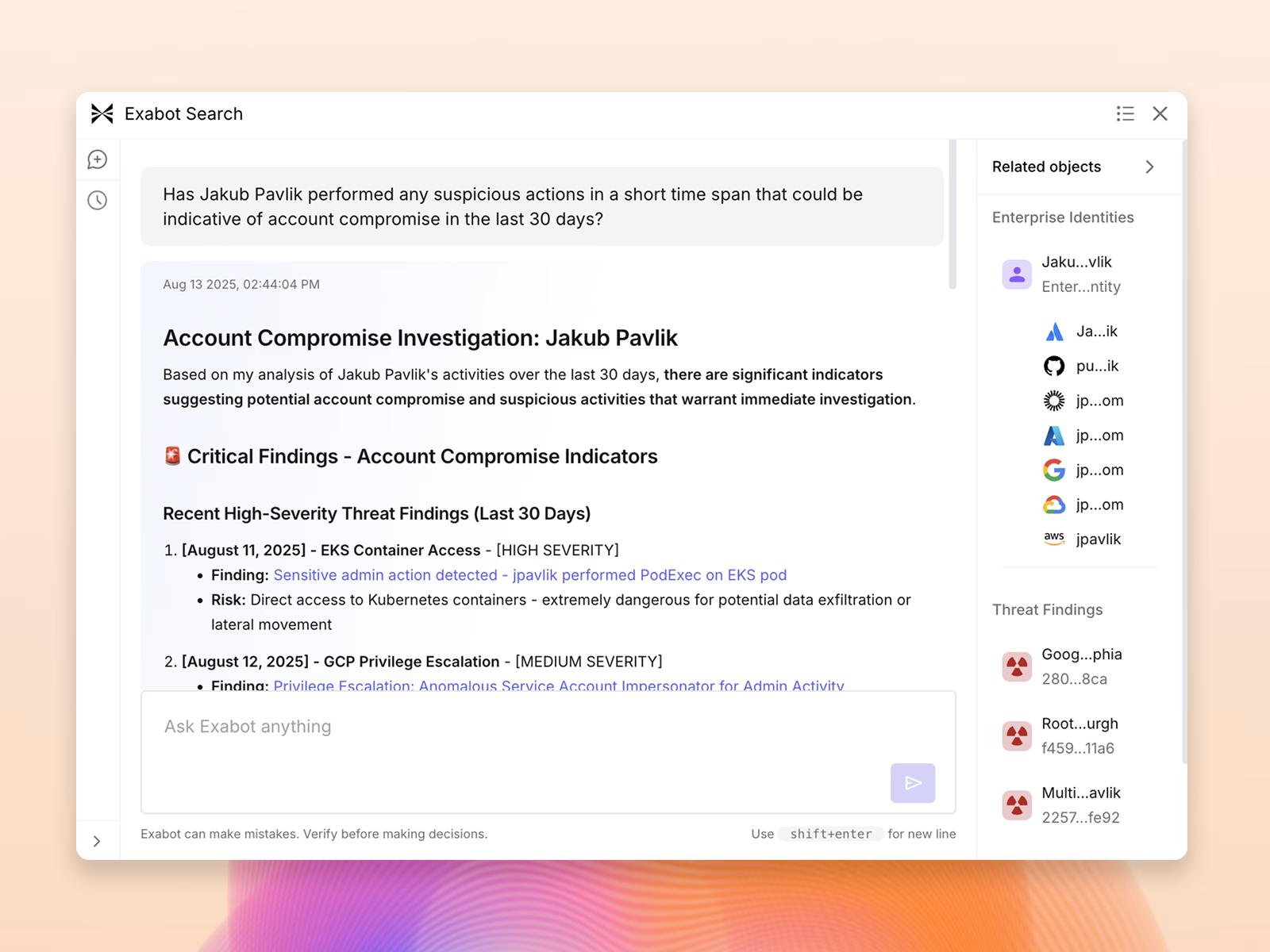
Contextual insider threat hunting
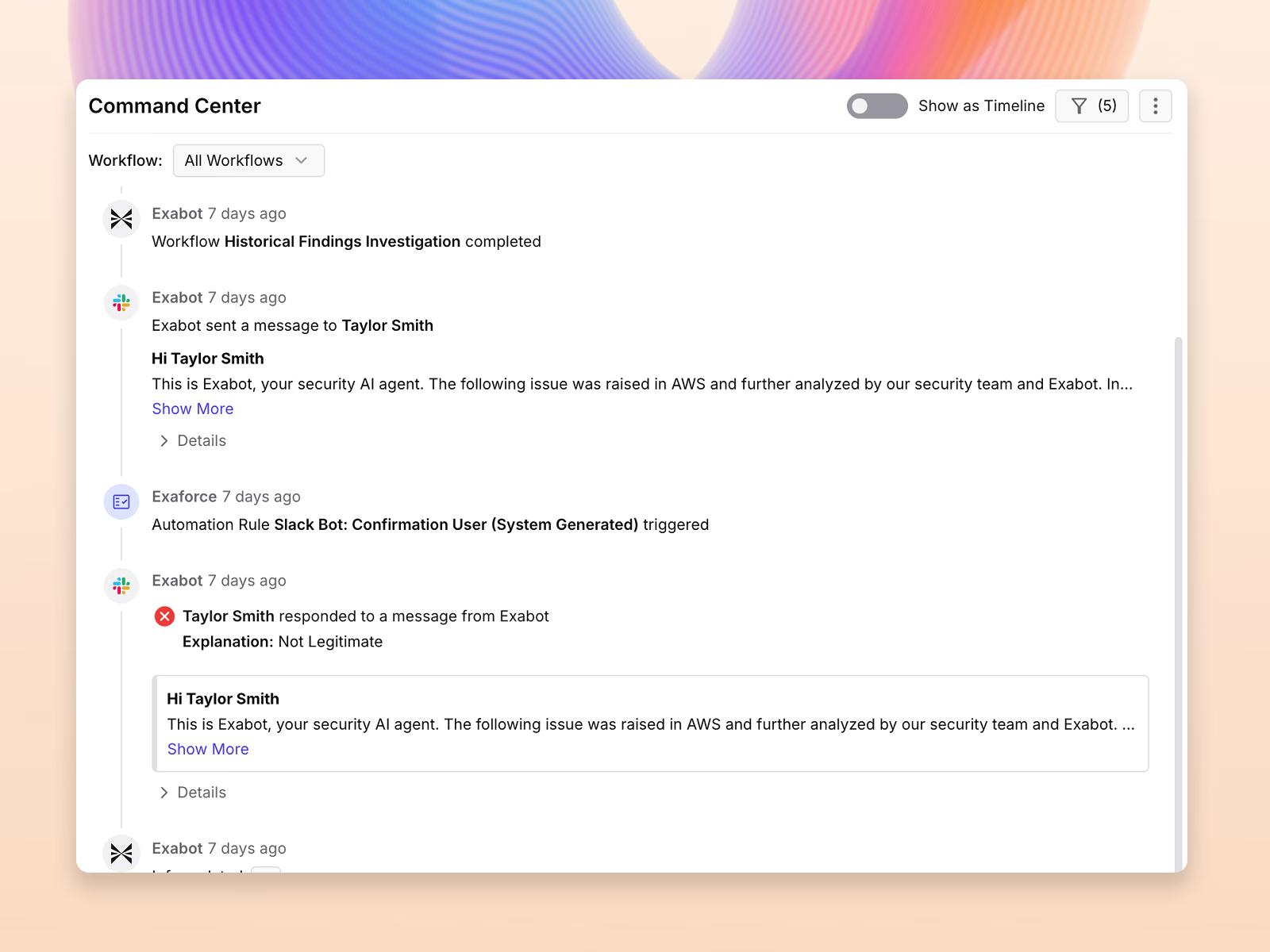
Combines cloud logs, permissions, and HR data into one insider threat narrative, cutting hours of manual work and instantly revealing the full story from compromise to exfiltration.
Contextual insider threat hunting
Combines cloud logs, permissions, and HR data into one insider threat narrative, cutting hours of manual work and instantly revealing the full story from compromise to exfiltration.
Faster, smarter containment
Exaforce streamlines critical actions like revoking access, rotating keys, and documenting steps, executed automatically or with analyst oversight, cutting response times and stopping insiders before they escalate or hide.
Faster, smarter containment
Exaforce streamlines critical actions like revoking access, rotating keys, and documenting steps, executed automatically or with analyst oversight, cutting response times and stopping insiders before they escalate or hide.
Fortune 500
Pioneering early with Exaforce and their novel agentic SOC platform has significantly enhanced our detection and response for cloud services, such as GitHub, used by our development teams, in spotting identity misuse. The platform delivered actionable cloud insights within 24 hours of onboarding - one example was identifying 3rd party vendor misuse of their credentials in our environment. The rich data platform provides quick answers to hard questions & tasks across our SaaS and IaaS environments.

Head of Product Security at F500 Digital Infra Company
Frequently asked questions
How does Exaforce detect subtle, multi-step insider threats?
How does Exaforce incorporate business context into insider threat detection?
How does Exaforce reduce false positives in insider threat detection?
How is Exaforce's approach different from traditional UEBA for insider threats?
Related resources

Evaluate your AI SOC initiative
A maturity mapped question framework to benchmark AI SOC platforms on detection, triage, investigation, response, and service quality.

Webinar: “What is AI SOC” Anyway?
Cutting through the hype with James Berthoty (CEO & Principal Analyst, Latio) and Taylor Smith (Director of Product, Exaforce)
Latio AI Security Market Report 2025
Get actionable insights about the latest developments in AI security. Written for both security leaders and engineers, this report covers the state of the market, leading use cases, and what vendor innovations.