
Breakthrough AI for security operations
Autonomous intelligence that turns hours of triage, hunting, and response into minutes while slashing false positives and analyst toil.
Challenges for SOC teams
Unsustainable cost
Building a SOC today requires substantial upfront investment. Sustaining one means keeping up with a growing alert volume faster than budgets grow.
Growing blindspots
Critical threats hide in alert backlogs and unmonitored data sources. While these coverage gaps grow, teams lack resources to address them.
Siloed visibility
Relying only on logs provides partial context, making security teams pivot across multiple systems to gather sufficient context to make a decision.
Slow response
Manual workflows and unclear escalation paths slow incident response by hours. Each delay widens the damage, yet cross-team coordination remains slow and error-prone.
Exaforce reimagines the SOC experience with agentic AI
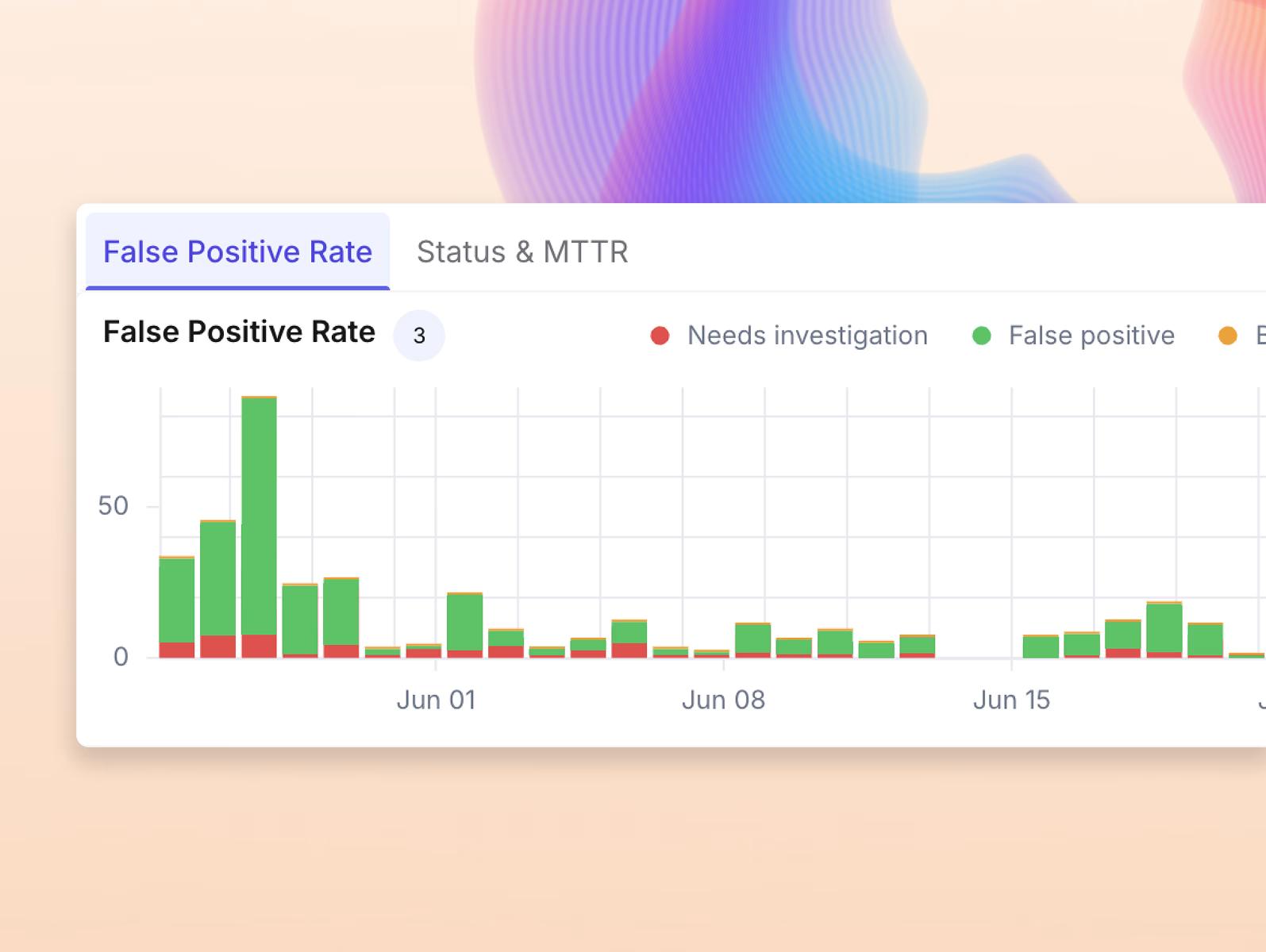
Sustainable security operations at scale
Exabots deliver 24/7 tier-1 to tier-3 analyst coverage without extra headcount, delivering enterprise-grade security in hours at lower TCO and scaling seamlessly with alert volume.
Sustainable security operations at scale
Exabots deliver 24/7 tier-1 to tier-3 analyst coverage without extra headcount, delivering enterprise-grade security in hours at lower TCO and scaling seamlessly with alert volume.
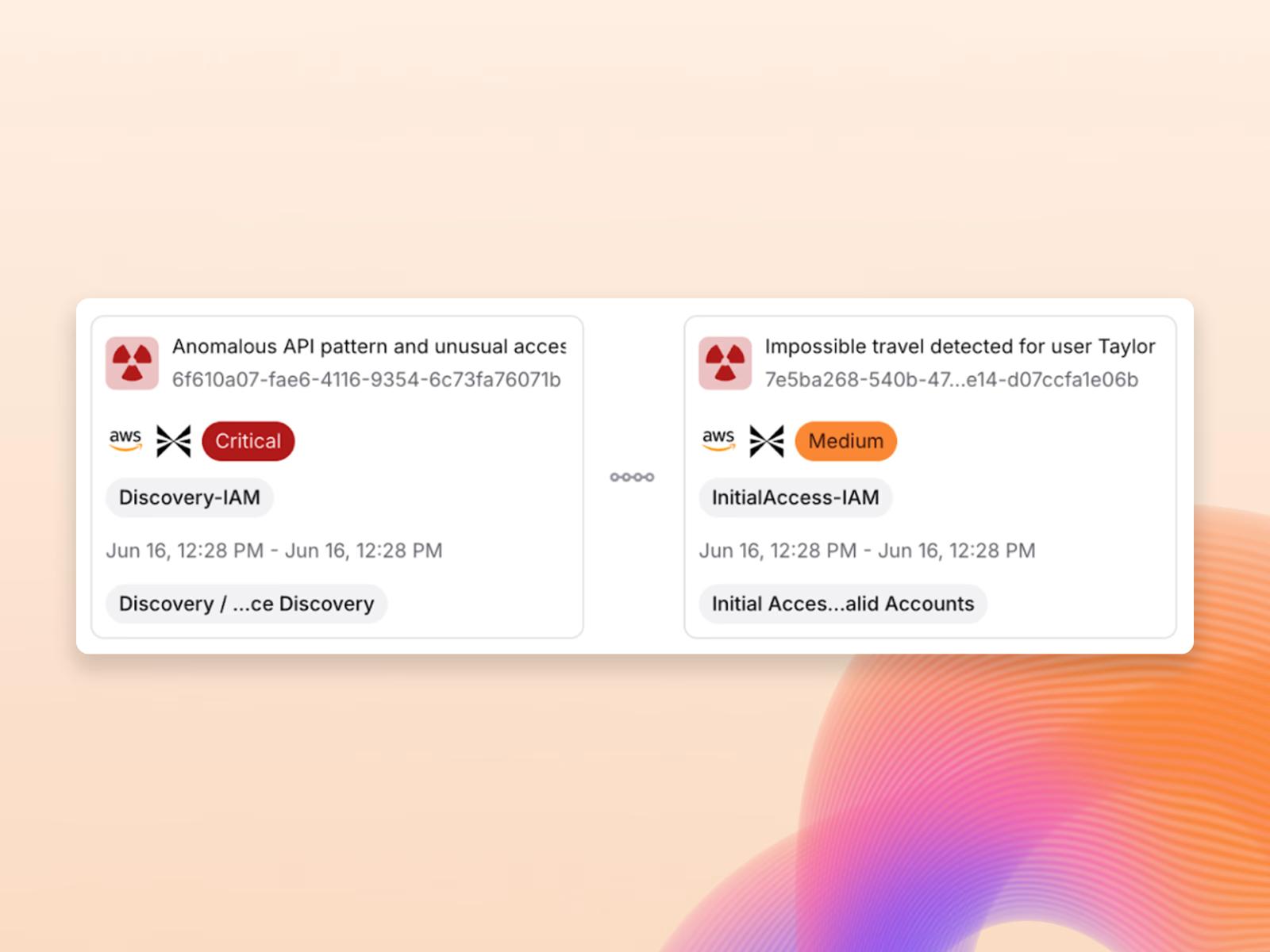
Comprehensive threat detection coverage
Exabots expand detection coverage and review 100% of alerts in real time, surfacing hidden threats and freeing teams to focus on what matters.
Comprehensive threat detection coverage
Exabots expand detection coverage and review 100% of alerts in real time, surfacing hidden threats and freeing teams to focus on what matters.
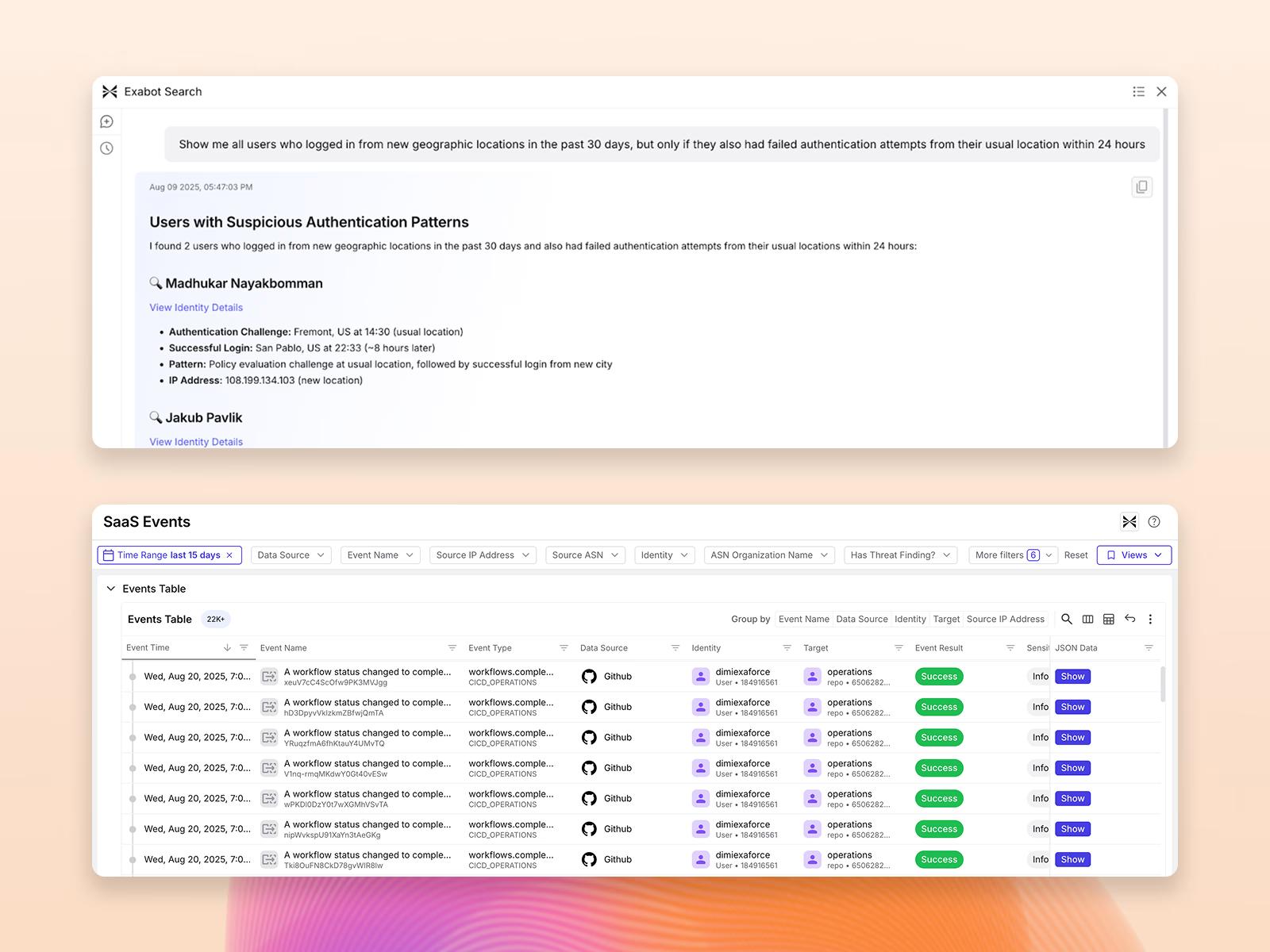
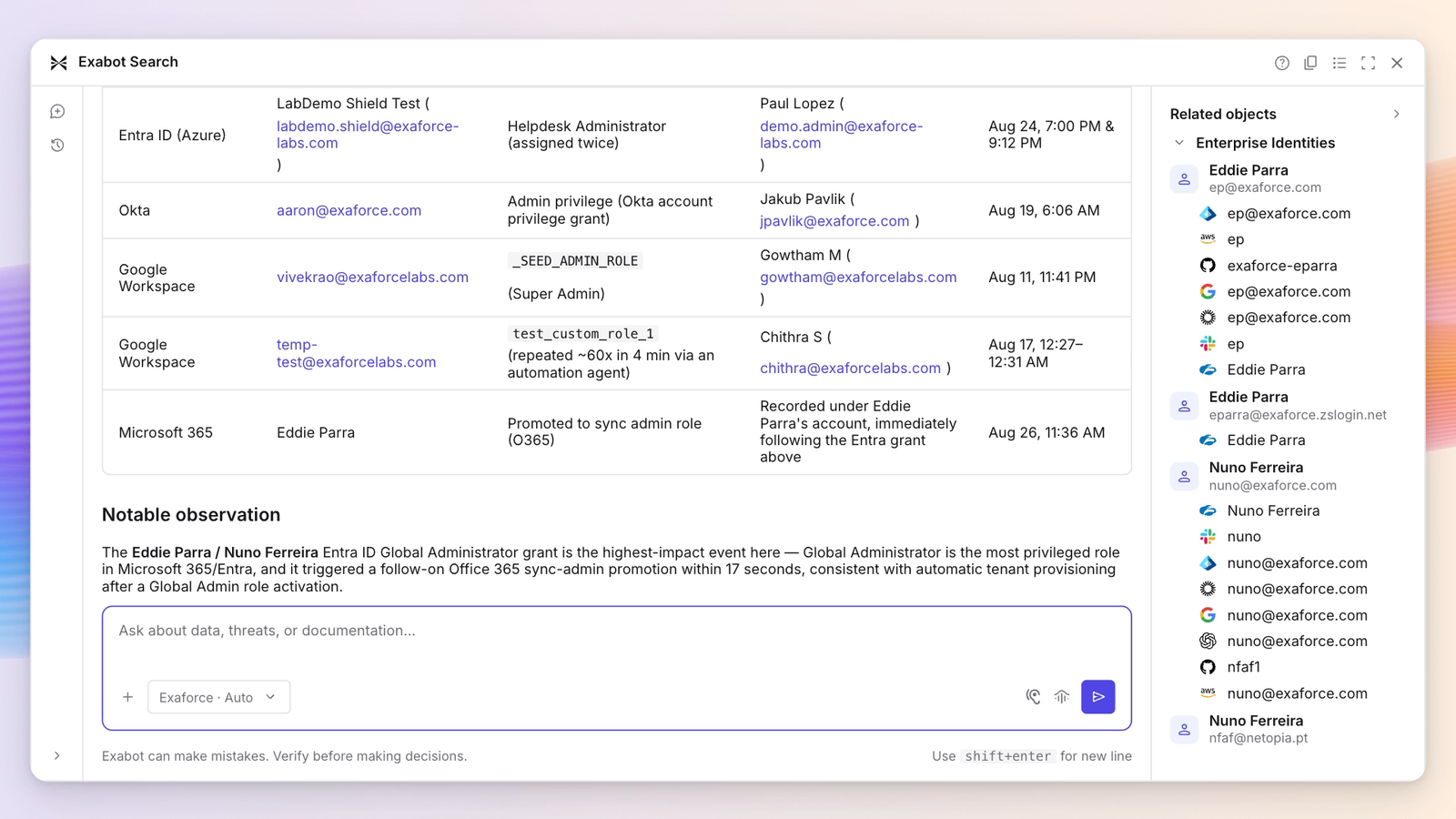
Security data unlike any SIEM
Unlike SIEMs that just store logs, our platform unifies cloud, identity, endpoint, and network telemetry, letting Exabots auto-correlate enriched data and deliver complete investigation insights without manual pivots.
Security data unlike any SIEM
Unlike SIEMs that just store logs, our platform unifies cloud, identity, endpoint, and network telemetry, letting Exabots auto-correlate enriched data and deliver complete investigation insights without manual pivots.
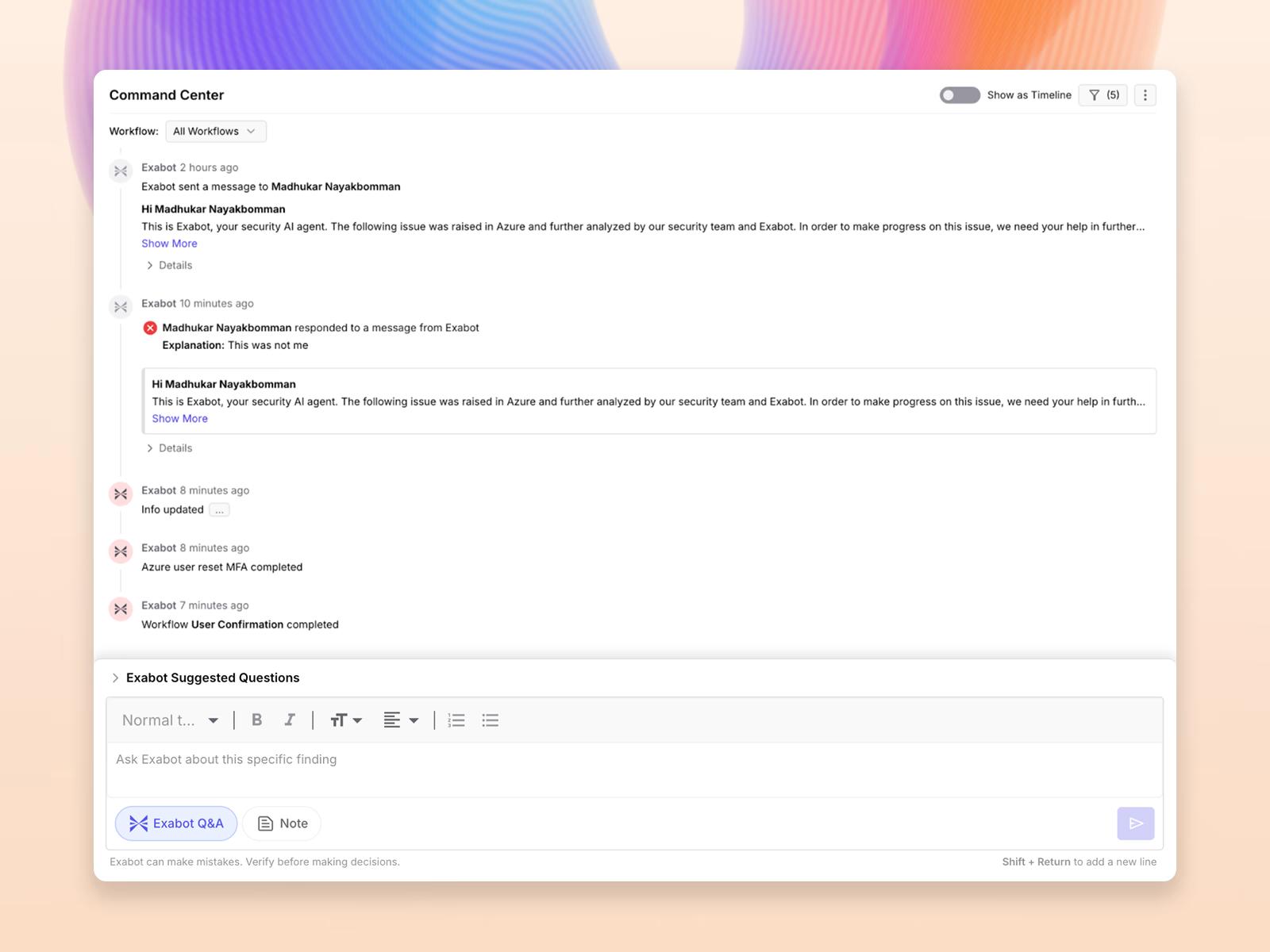
Accelerated incident response
Exabots execute response workflows automating user verification, containment, and access revocation, turning hours of manual coordination into rapid responses that outpace attackers.
Accelerated incident response
Exabots execute response workflows automating user verification, containment, and access revocation, turning hours of manual coordination into rapid responses that outpace attackers.
Latio
Teams today are struggling to optimize their use of AI for SOC efficiency without creating data problems along the way. To solve this, a solution needs to be able to standardize and gather both posture and runtime data to enable full AI optimization. Exaforce is tackling this issue head-on. This solution is taking an “AI Native” approach to security operations by building the first end-to-end SOC platform for agentic AI.

Founder and Industry Analyst at Latio
Frequently asked questions
Can I use Exaforce if I already have a SOC team and existing security tools?
How does Exaforce maintain comprehensive coverage without creating more alert noise?
How does unified telemetry improve threat detection compared to log-only approaches?
How is Exaforce's Agentic AI SOC different from traditional SOC approaches?
What makes this approach more sustainable than traditional SOC operations?
Related resources

Evaluate your AI SOC initiative
A maturity mapped question framework to benchmark AI SOC platforms on detection, triage, investigation, response, and service quality.

Webinar: “What is AI SOC” Anyway?
Cutting through the hype with James Berthoty (CEO & Principal Analyst, Latio) and Taylor Smith (Director of Product, Exaforce)
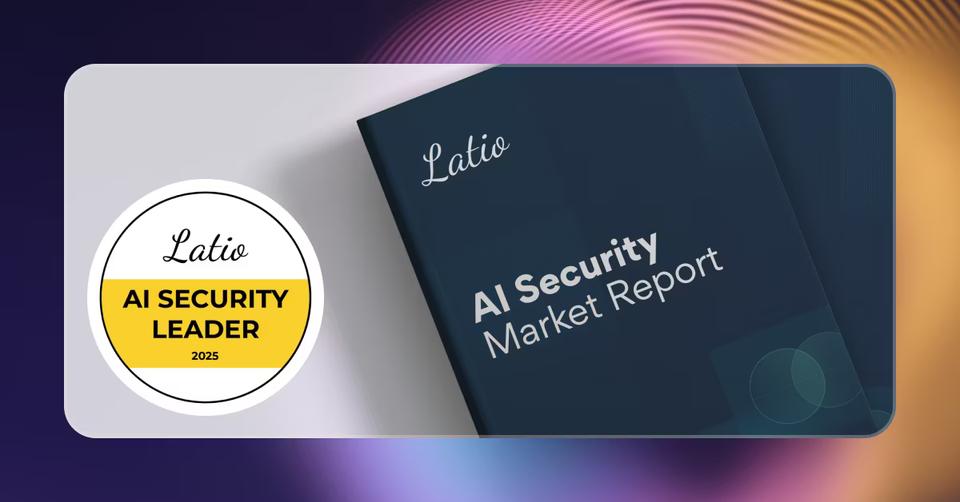
Latio AI Security Market Report 2025
Get actionable insights about the latest developments in AI security. Written for both security leaders and engineers, this report covers the state of the market, leading use cases, and what vendor innovations.