
Multi-Model AI
Deterministic, explainable AI for precision SecOps
As both log volume and attacks increase with AI, Exaforce’s multi‑model architecture (Semantic, Behavior, and Knowledge Models) makes LLM‑driven decisions predictable, auditable, and aligned to your business, cutting noise while raising confidence across detection, triage, investigation, and response.
How multi‑model AI makes LLMs ready for production
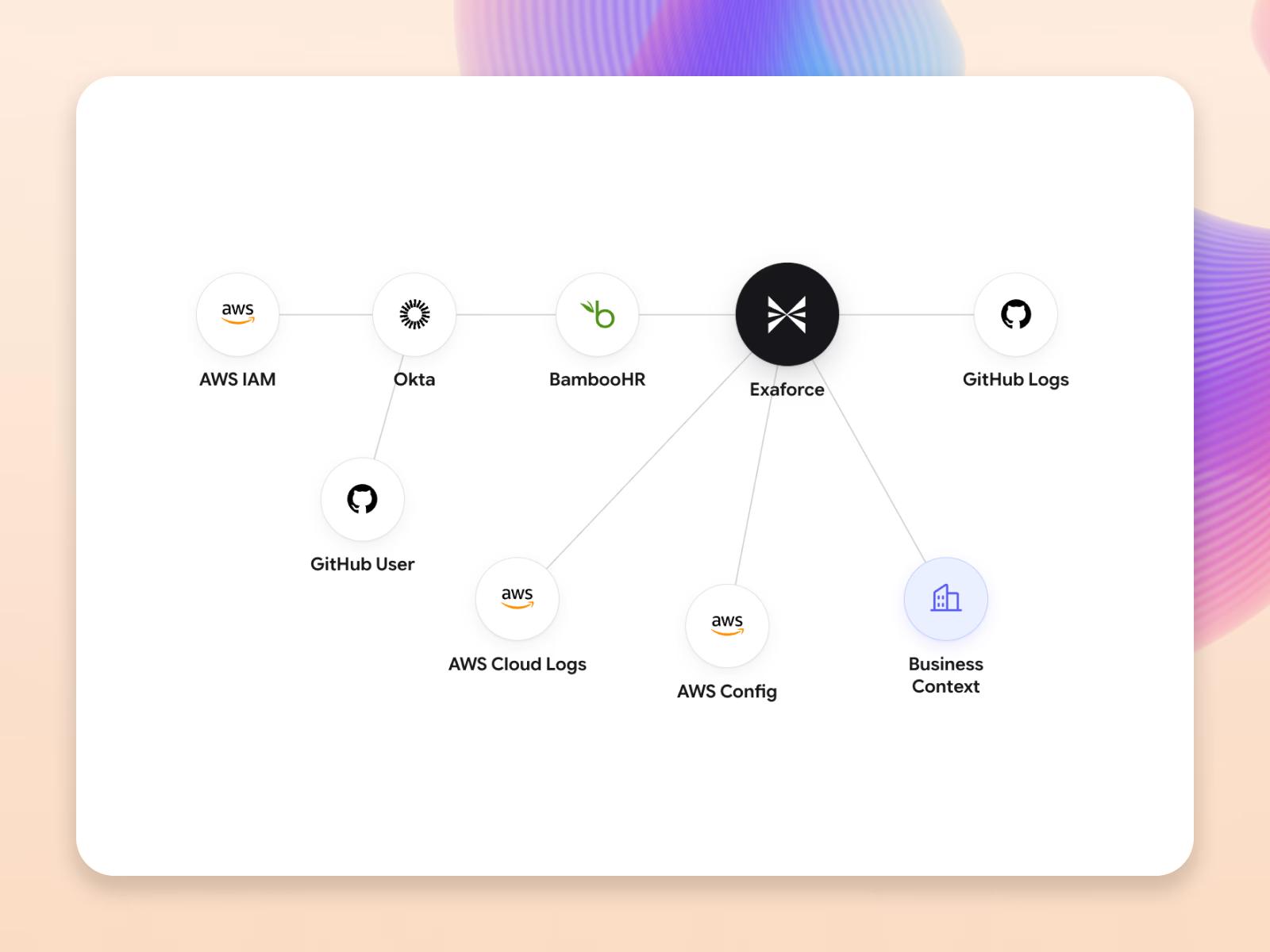
The Semantic Model builds and maintains relationships between identities, resources, and actions, creating a living map of your environment for fast, precise reasoning. It stores context in a structured form, so the system interprets intent, understands dependencies, and reacts with clarity instead of guesswork. You gain faster decisions, higher fidelity outputs, and a foundation that strengthens as complexity grows.
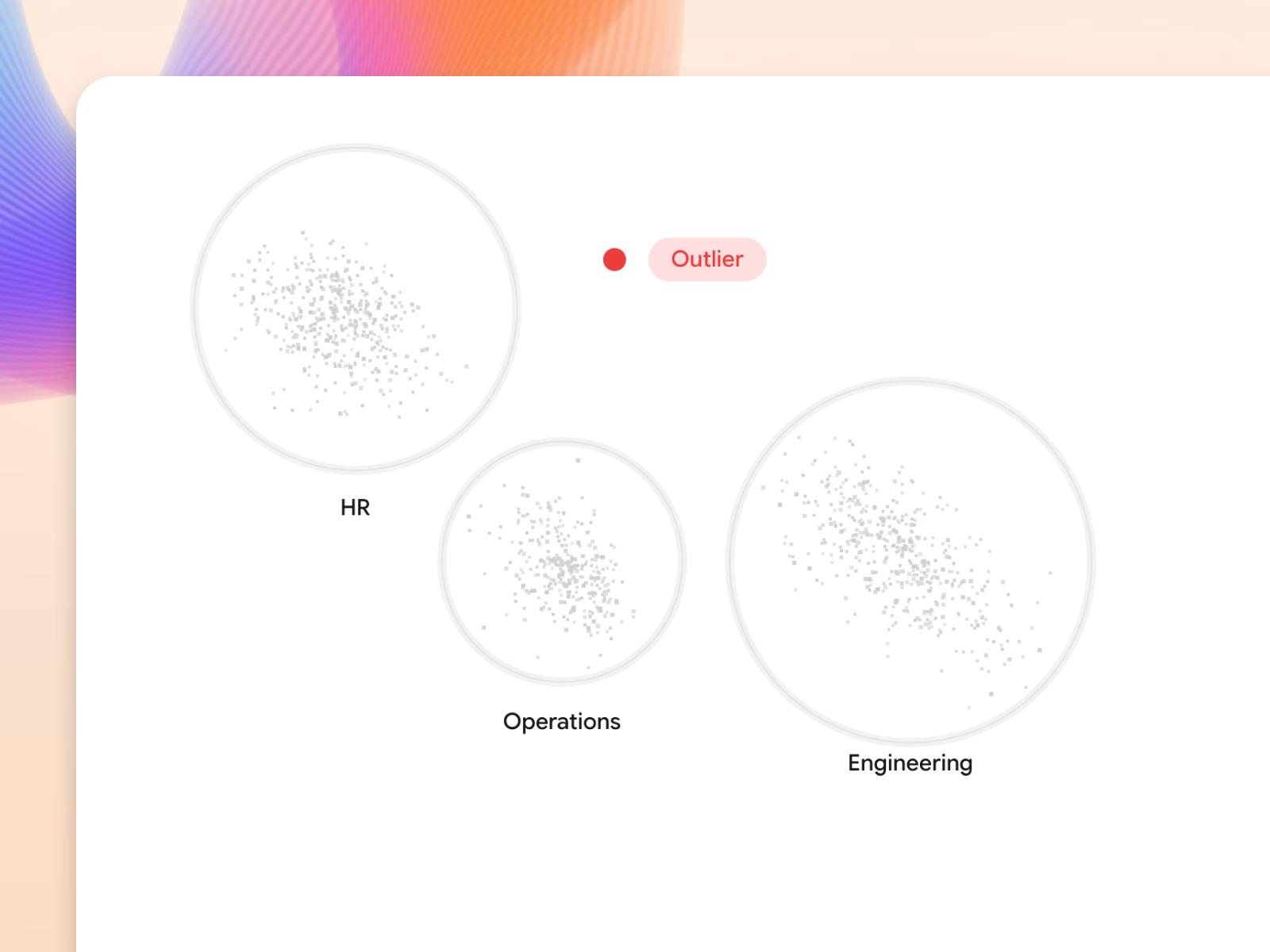
The Behavioral Model continuously establishes what “normal” looks like across every entity, including users, identities, resources, and devices, and quantifies deviations using explainable anomaly scores. Rather than relying on single-dimensional baselines that generate false positives, it evaluates multi-dimensional co-occurrence across factors such as location, time of day, entity attributes, and associated risk to produce comprehensive and accurate anomaly scoring.
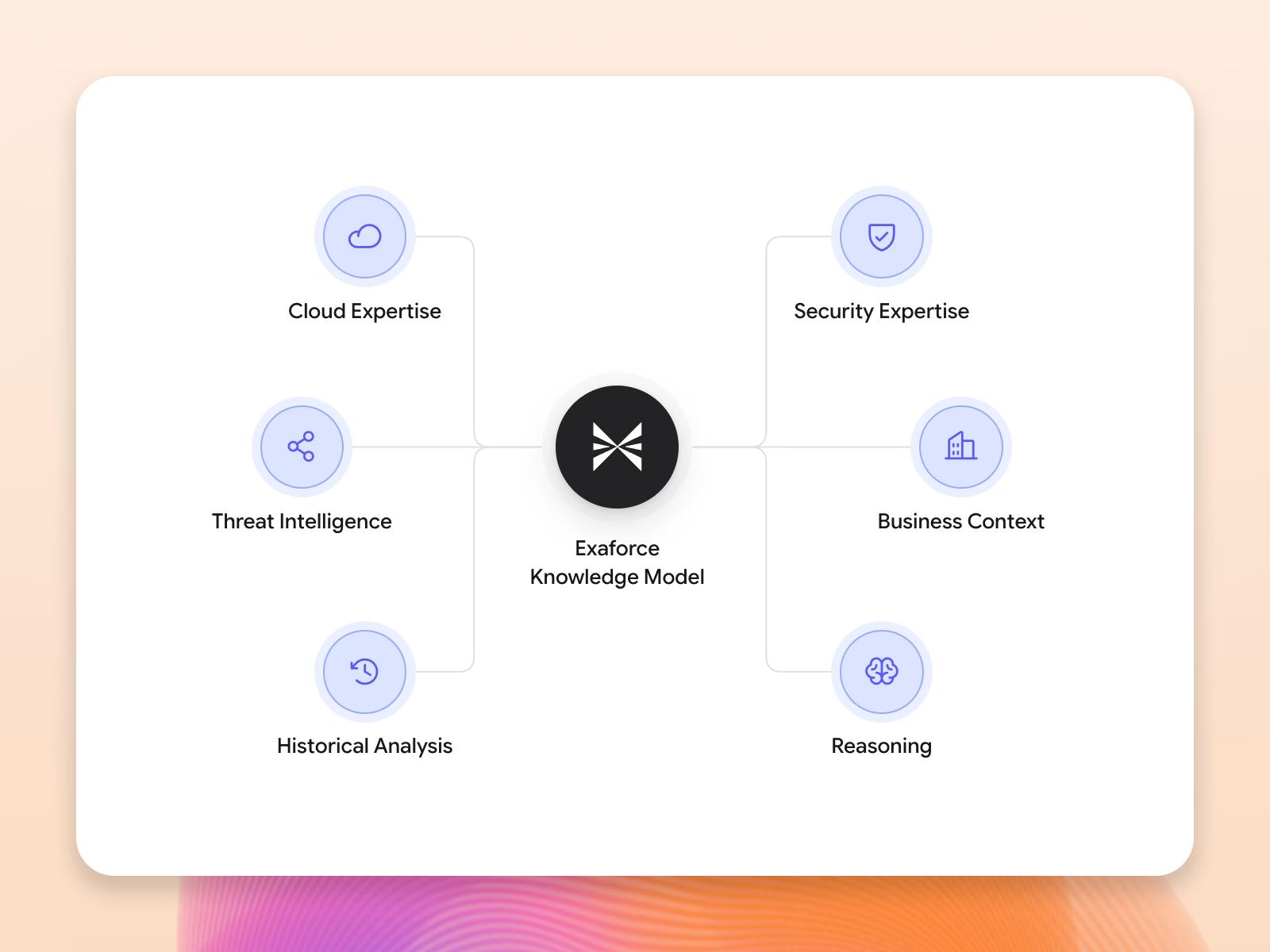
The Knowledge Model blends deep technical expertise, curated external intelligence, and intimate awareness of your environment. It draws from LLM reasoning, historic decisions, and hard-coded business rules to understand how your applications, infrastructure, and policies actually operate day to day. High-level intents are broken down into precise checks across the Semantic and Behavior layers, then reported back as clear summaries with supporting evidence, so analysts and auditors see not only the answer but the why behind it.
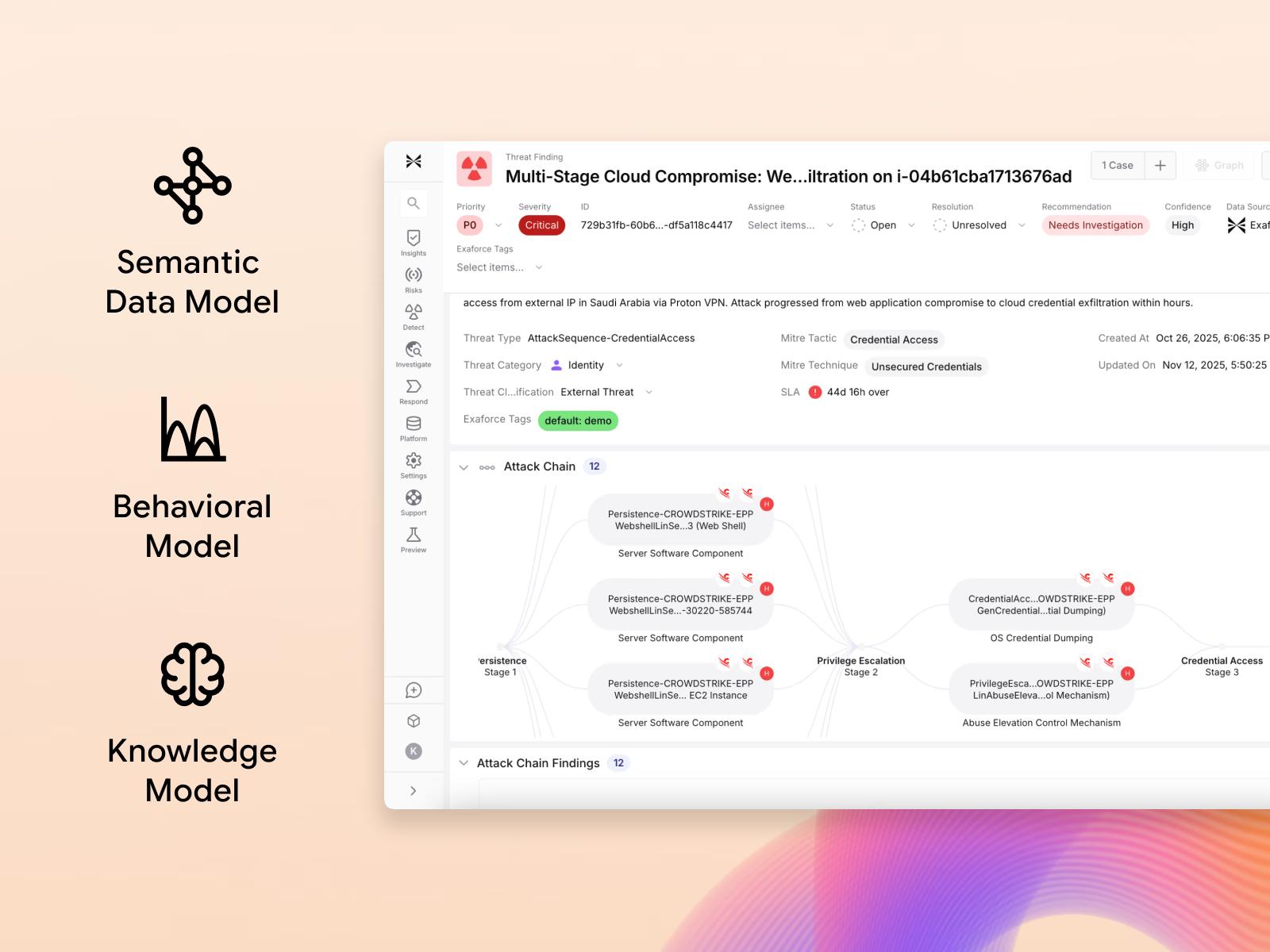
Multi-model AI replaces ad-hoc prompting with governed reasoning for consistent, auditable results. The Semantic, Behavior, and Knowledge Models work within your guardrails, with explicit data scope, curated context, and full logging. You get focused, human-like interaction tailored to your business, not a general-purpose chatbot.
With Exaforce's Exabots, we've accelerated detection, threat hunting, response, and investigations while expanding coverage without adding headcount. Our team uses Exabot's natural language search to get actionable answers about security events and security posture in a single tool instead of juggling disparate interfaces and query languages. Exaforce has become a high-trust partner, and the platform has transformed how we run security operations.

CISO, Guardant Health
Frequently asked questions
How does multi‑model AI make LLMs more deterministic?
How is the Knowledge Model different from “just an LLM”?
How is the behavioral model different from UEBA?
What guardrails keep the system safe?
Will this work with my existing SIEM/EDR/IDP stack?
Related resources
Exaforce Named a Leader and Outperformer in the 2025 GigaOm Radar for SecOps Automation
GigaOm compared 19 vendors across key features, emerging features, and business criteria dimensions.

One LLM does not an AI SOC make
LLMs have the potential to improve SOC processes, but they’re not enough on their own. This blog explores why AI SOCs need pre-processing and a new design to add value.

GPT needs to be rewired for security
How a deterministic, multi-model engine delivers reliable SOC automation outcomes, including real-time triage, fewer false positives, and reduced MSSP/MDR dependence.