Every security leader wants the same operational outcome. When something looks off, the team can quickly answer four questions: what happened, what it means, what the blast radius is, and what to do next. Leaders also want those answers backed by evidence that holds up under scrutiny. But were traditional SIEM platforms, now bolted on with LLM wrappers, really built to provide that level of assurance under pressure?
That’s the core of the SIEM possible challenge. Most SOC workflows that rely solely on SIEM still start with events and end with people manually stitching the story together across identity, cloud, SaaS, endpoint, and collaboration platforms. That stitching is where most teams get exhausted. It’s also where teams either over-scope response because they can’t narrow confidently, or they under-scope because they can’t prove impact.
A practical way to assess whether your SOC is built for today’s incidents is to look at the questions you can answer quickly, and without tool pivots.
Take the #SIEMpossible Challenge and see how your SIEM stacks up against other security practitioners'. You'll get a personalized benchmark report highlighting where your SOC is ahead and where hidden gaps may be slowing you down: exaforce.com/siem-possible

When sensitive data exposure is suspected, can you answer which sensitive files are shared externally right now, who made them public, and how many external users have access? When an identity is suspected of compromise, can you calculate the blast radius of that identity, including inherited permissions and which production systems that person can reach? When a new threat makes headlines, can you quickly determine its potential impact on your environment in the same timeframe it takes attackers to weaponize and exploit it? When an alert fires, can you see what changed right before it and why that change mattered?
Exaforce is built around delivering these answers without heavy lifting. That's why organizations like Forcepoint, Replit, Invisible, and Guardant Health trust Exaforce. Customers have reduced investigation times, automated false-positive triage at scale, and improved response times for critical incidents. Most importantly, they gain evidence-backed answers when decisions matter most. Read customer testimonials to hear it directly from them in our case studies.
Can your SIEM do that?
Here’s a different way of thinking about your SOC strategy. Instead of pitching you what we can do, here’s some examples of recent attack campaigns and what factors are important for visibility based on them.
1. Sensitive data exposure through sharing
In September 2023, Google reported that a REDCap server belonging to a North American medical research institution was compromised. The threat actor went undetected for a while silently “BCC-forward” of matched emails to a threat actor-controlled account.
Such incidents show up as a series of normal actions that become risky in aggregate: a link setting changes, a collaborator gets added, a folder inherits permissions, someone forwards an email with sensitive info outside the org, and suddenly you have sensitive data reachable by people you don’t control.
Reference: https://cloud.google.com/blog/topics/threat-intelligence/prc-targets-us-medical-research
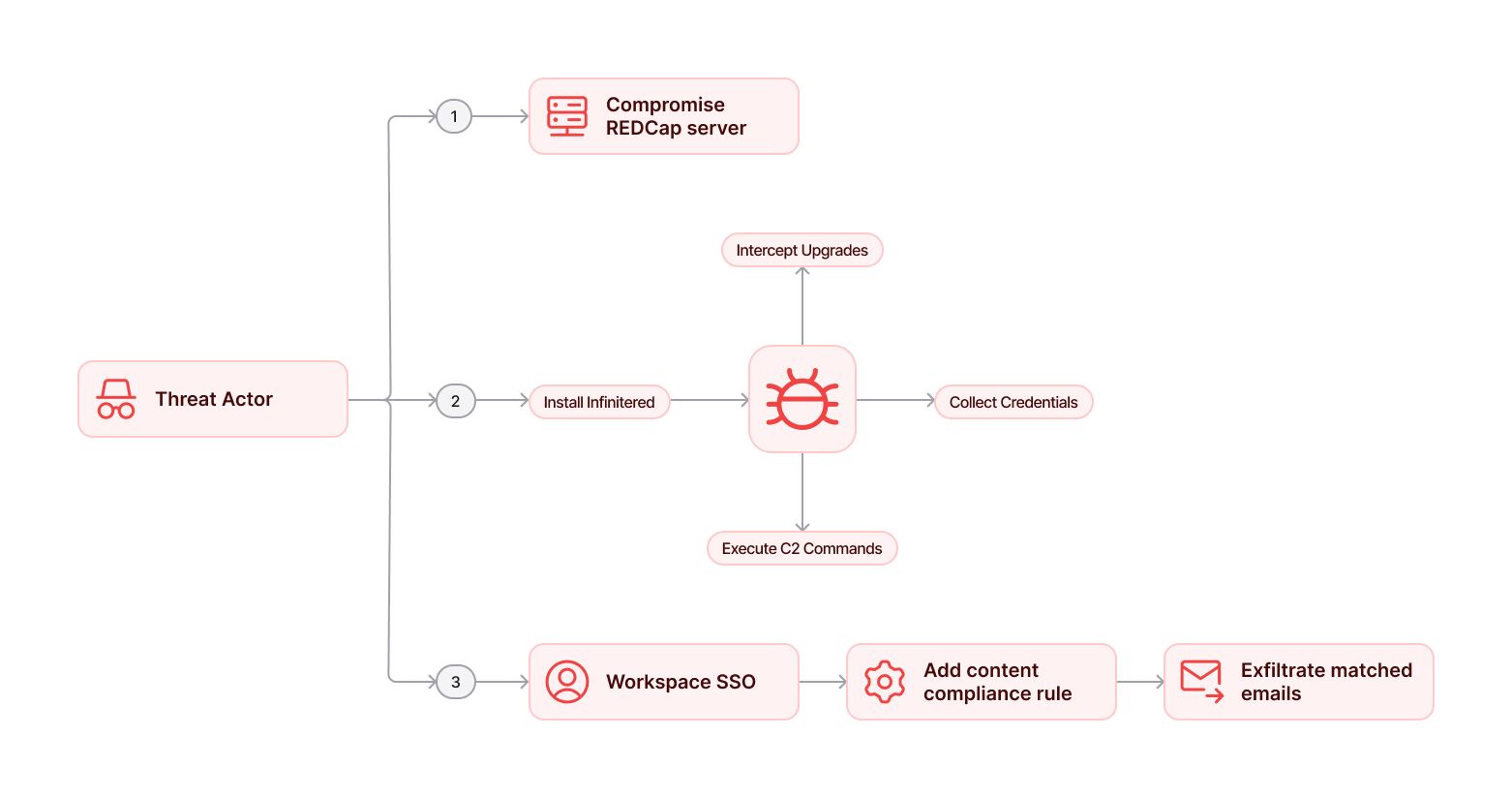
In this scenario, leaders need the SOC to produce a concrete exposure assessment on Google workspace. Which sensitive assets are externally accessible right now? Who enabled that access? Through what mechanism (public link, external guest, inherited group permission, delegated sharing tool)? How many external users have access, and is it broad or narrow? Most importantly, is the exposure current, or historical?
The reason this scenario breaks traditional workflows is that the “truth” isn’t in a single event. It’s in the access graph. Events tell you what happened. They don’t necessarily tell you what is true right now. Leaders need the “right now” answer because it determines whether the response is surgical or disruptive.
A platform that’s built for answers should be able to assemble that access story quickly: the current sharing state, the path that created it, and the scope of what’s exposed, presented in a way that supports a containment decision.
2. Identity compromise and blast radius
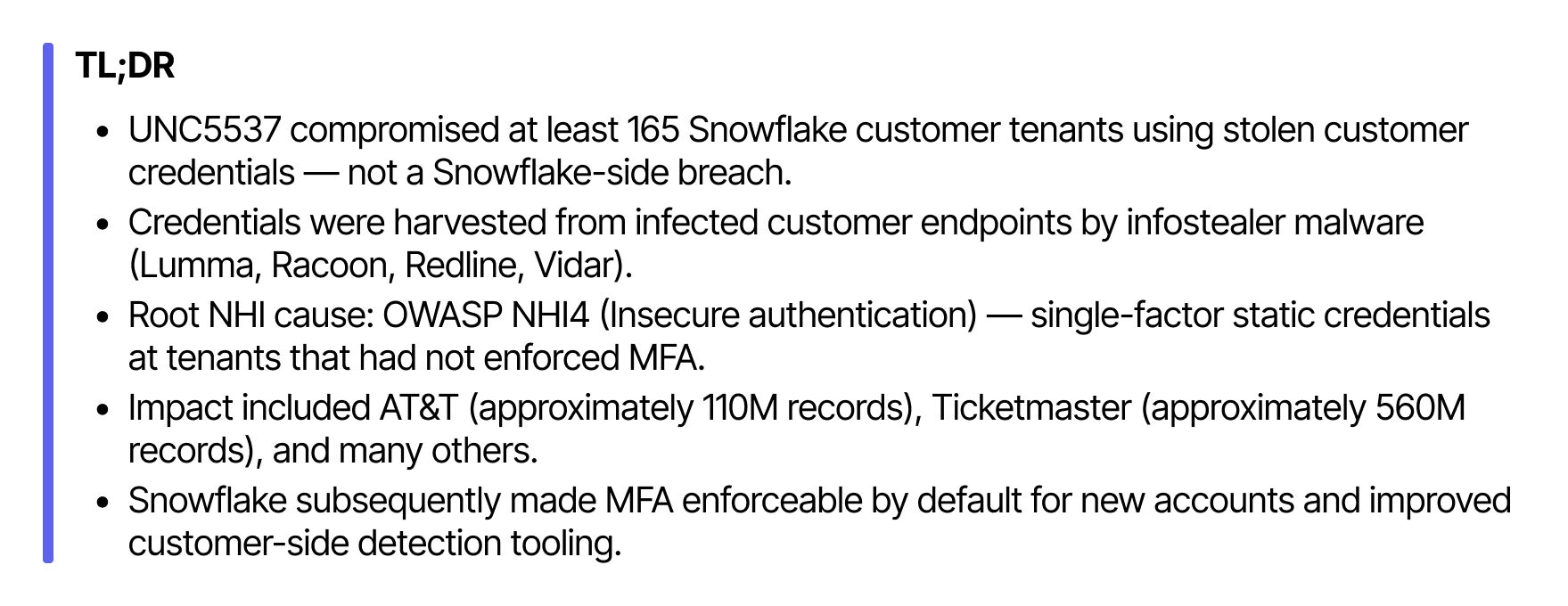
Attacks like the Snowflake UNC5537 breach show us how a single identity and authentication abuse can lead to millions of customer records being exposed. In early-to-mid 2024, a threat actor that Mandiant tracked as UNC5537 systematically authenticated to Snowflake customer tenants using static credentials it had obtained from infostealer logs. This led to a breach impacting approximately 110M customer records and a $370k ransom payment.
Source: https://nhigovernance.com/breaches/snowflake-unc5537-2024.html
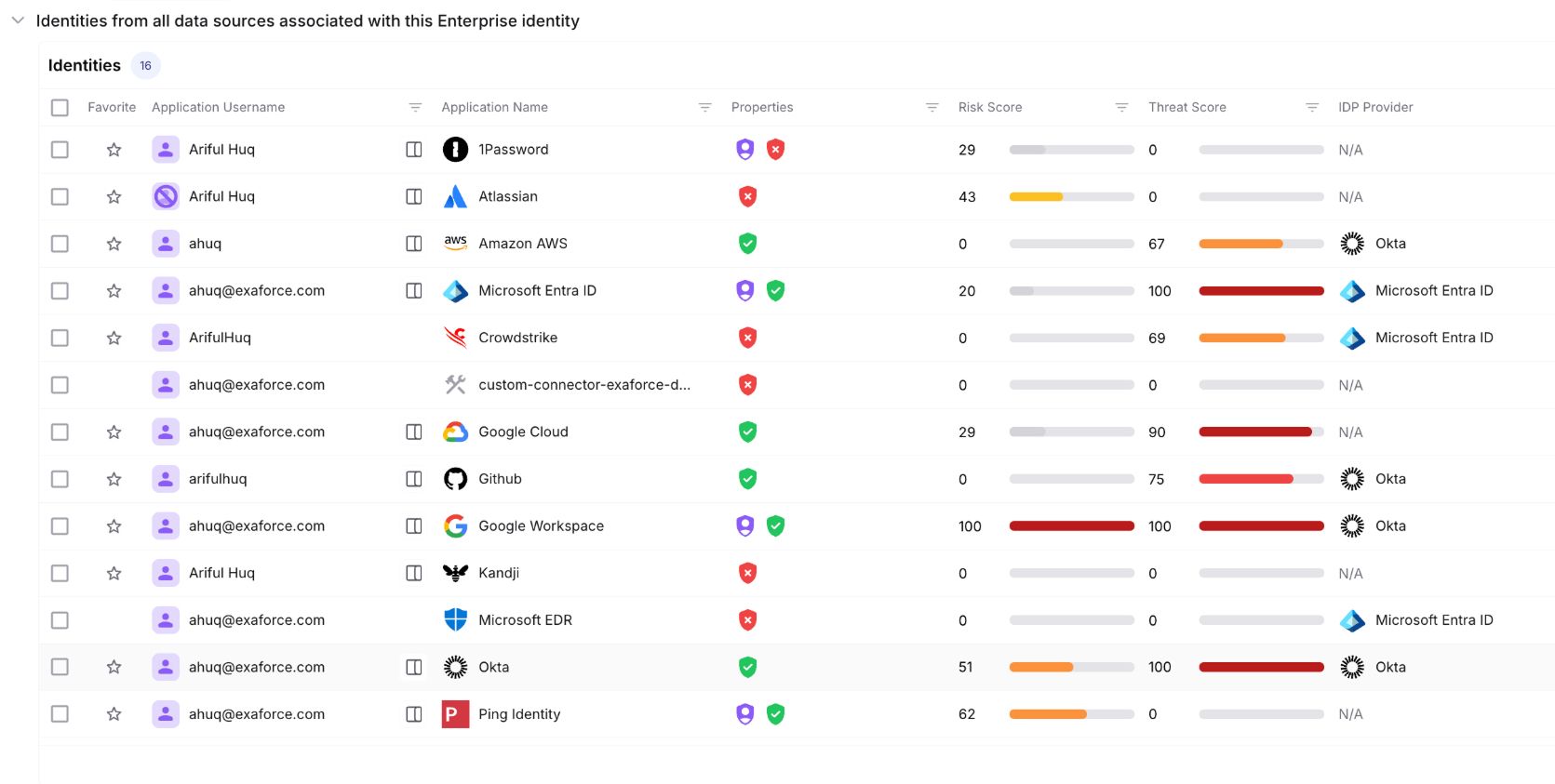
An answers-first SOC model treats identity mapping and blast radius as a first-class output. The SOC should be able to state, with evidence, what access the identity has, whether the identity is effectively an administrator, what it can access, and what makes the situation high-risk versus noisy. That clarity is what allows narrow containment and faster recovery.
Identities mapped across all platforms and data sources in Exaforce
3. Native detection coverage
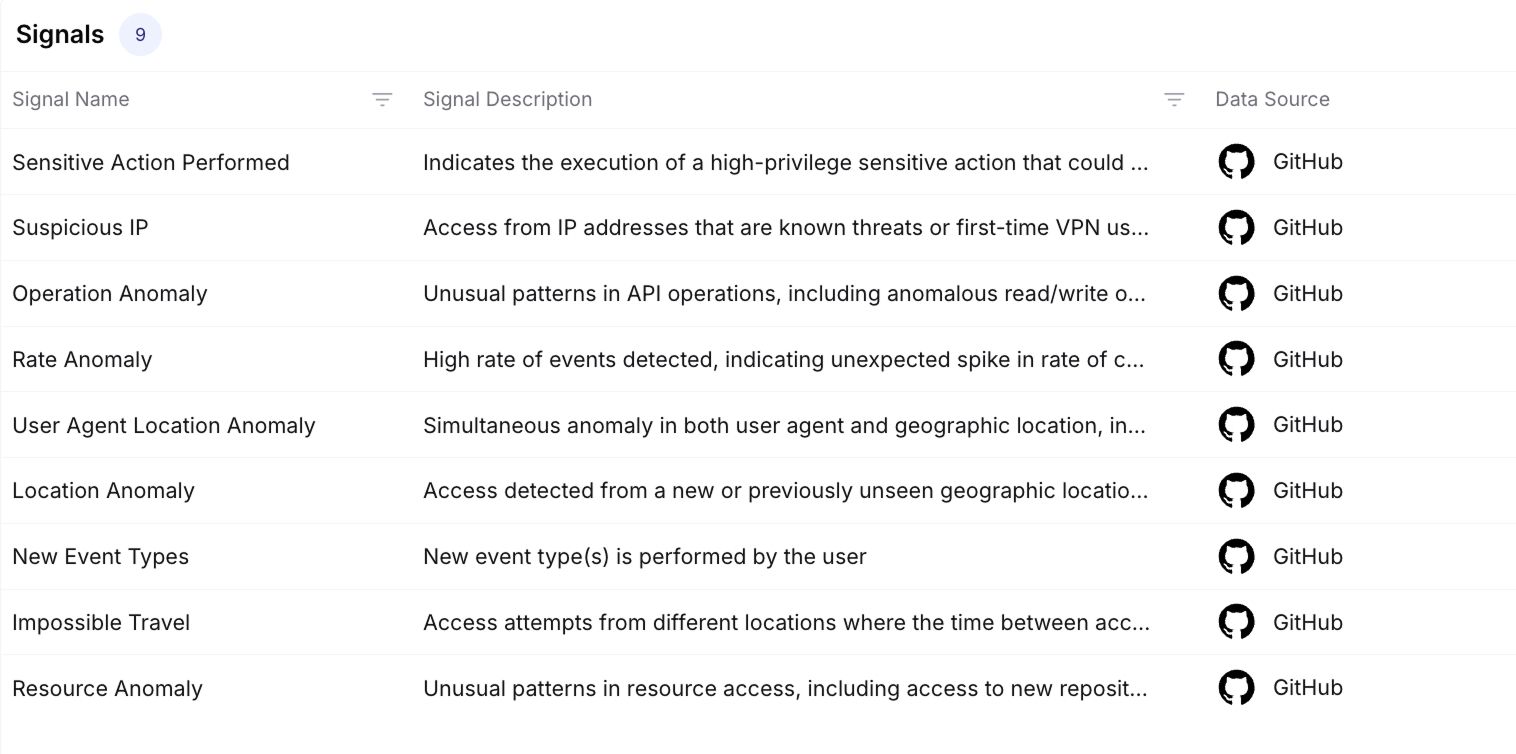
Most SOC teams struggle here because traditional SIEM platforms do not provide comprehensive detection coverage across all critical data sources, such as Github. As new threats emerge, teams must invest significant manual effort to build and maintain detection rules for these platforms.
Creating effective detection coverage requires specialized skills and domain expertise, often requiring dedicated detection engineers who are in short supply. Even when organizations have the right resources in place, maintaining detections remains an ongoing challenge. More importantly, static out-of-the-box rules limit the types of threats that can be detected, making it difficult for security teams to keep pace with an evolving threat landscape. The solution requires a multi-layered detection approach with a blend of rules and anomaly detection built into the platform with preconfigured baselines that don't require user maintenance. A hierarchical solution that allows for high volume, low fidelity signals to become low volume high fidelity alerts, all without team intervention.
Exaforce native detections on Github
4. The enabling “change” behind an alert
Many real incidents have an enabling configuration change. But these configuration updates live in a different system outside of a typical SIEM platform. Maybe a CSPM (Cloud Security Posture Management), SSPM (SaaS Security Posture Management) or a CNAPP (Cloud Native Application Protection Platform) is where you go to look for configuration changes. Not having this directly integrated into the platform where your SOC operates creates an incomplete story to the attack chain.
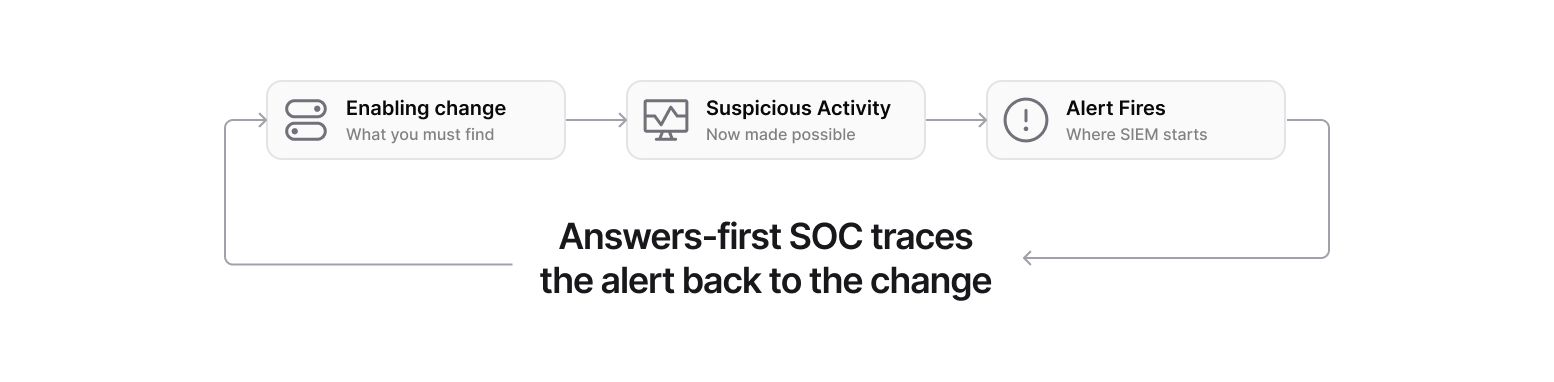
Something changed that made the suspicious activity possible; a role was assumed, a permission was granted, a token was created, an OAuth app was approved, a policy changed, an integration was connected, a repository permission expanded, or a sharing setting was altered.
A SOC that can consistently find the enabling change will contain faster and more accurately because it targets the condition, not the symptom. A SOC that can’t will waste time chasing alerts while the underlying access path remains open.
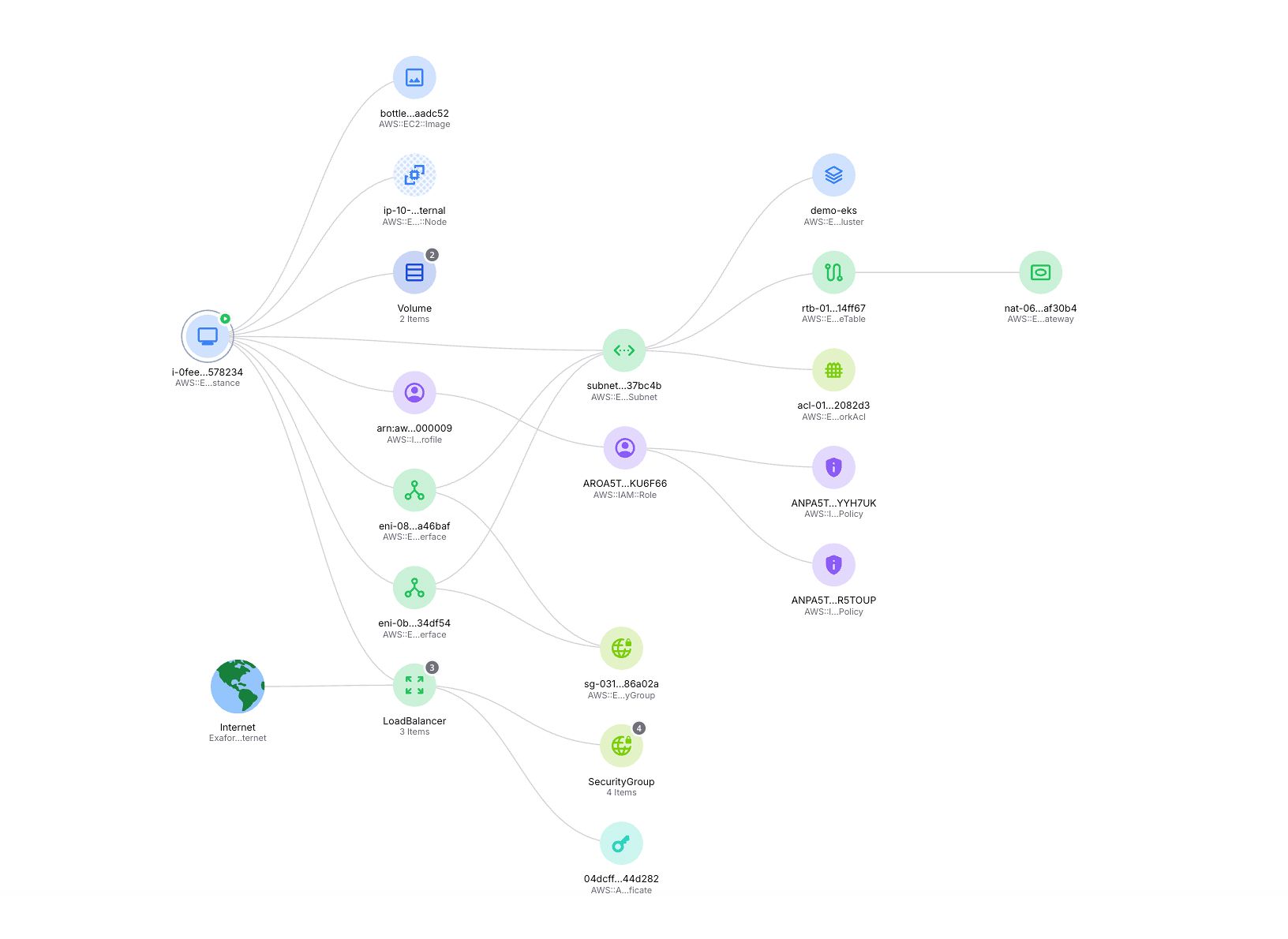
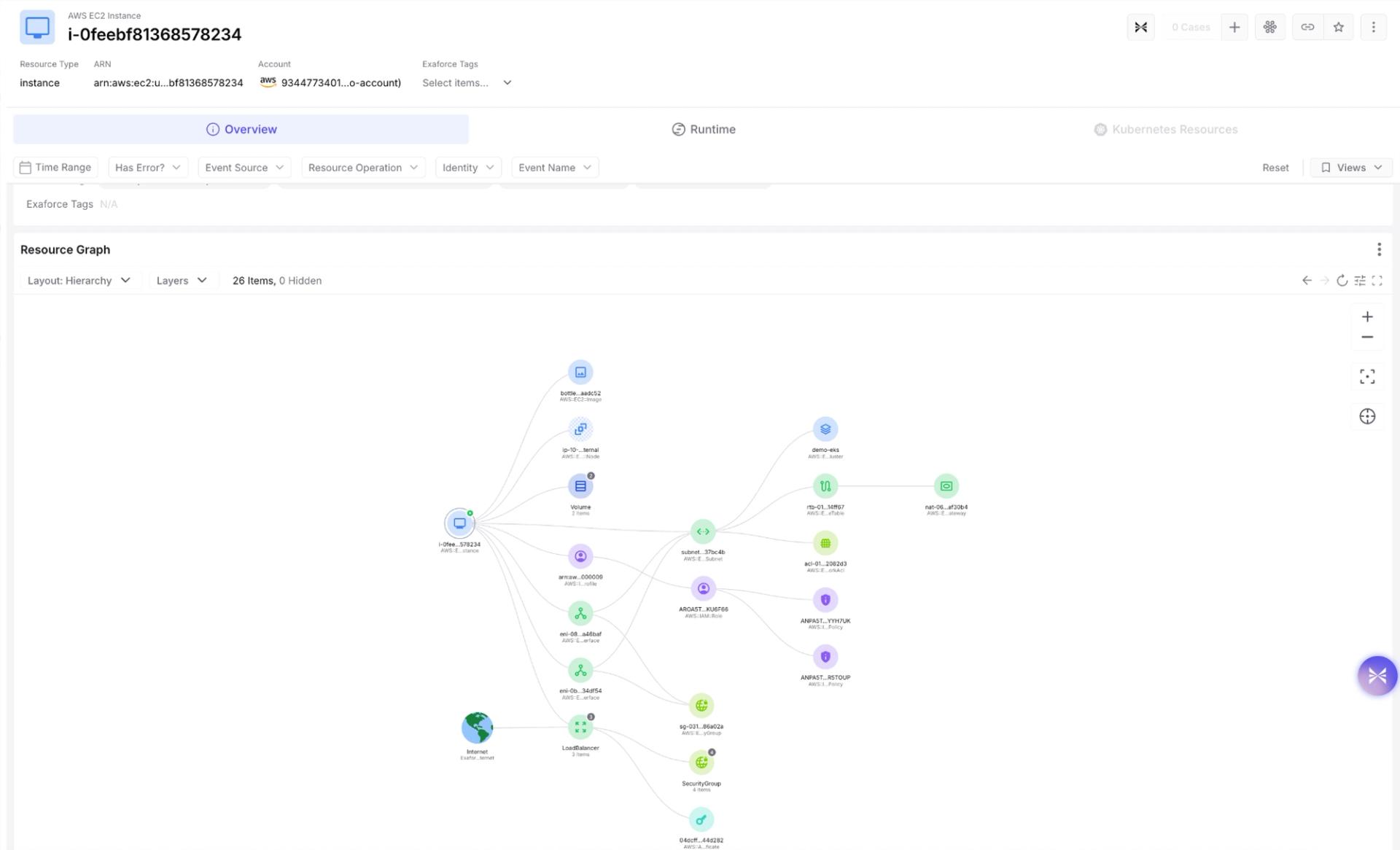
This is where a “more queries” approach fails. You can’t query your way into cohesive answers reliably when context is fragmented - when your runtime and configuration data live in different repositories. You need both sets of data and correlation that’s built into the platform so the investigation naturally surfaces the “what changed” narrative early.
Resource graph mapping resources, devices, and identities
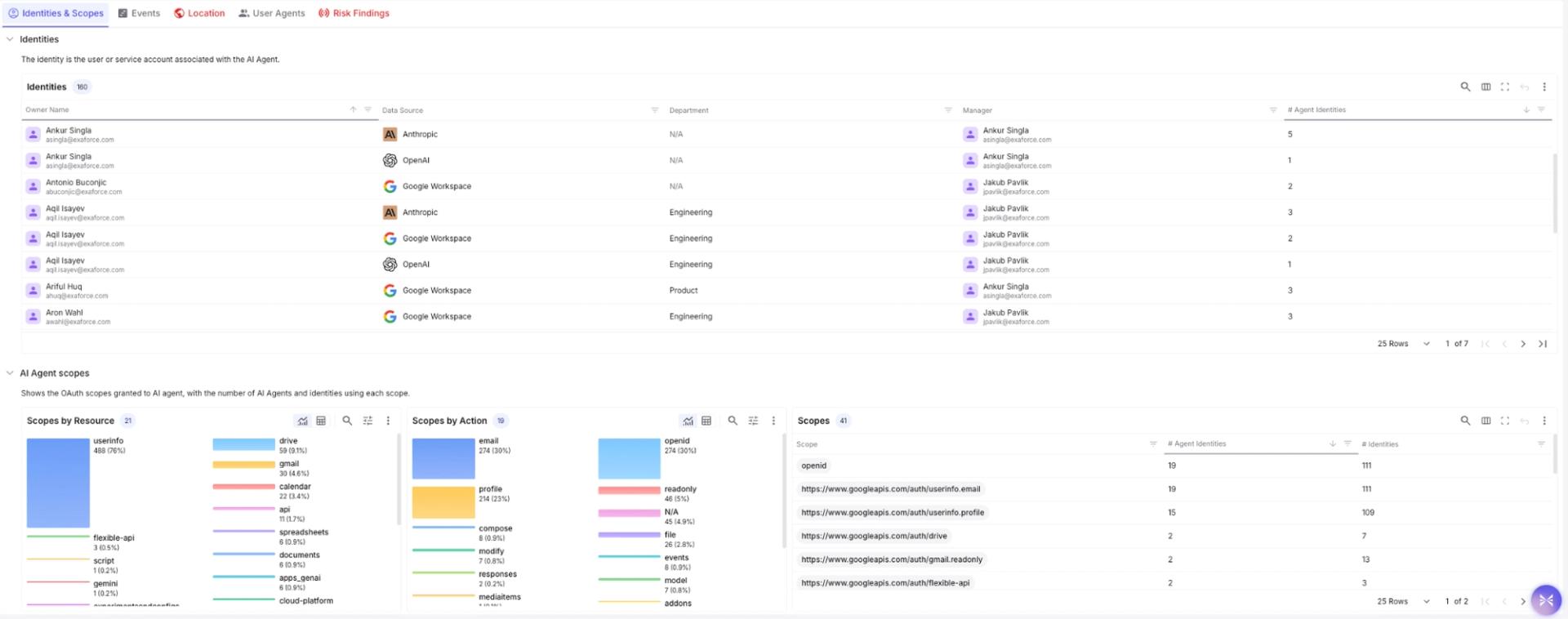
User identities mapped to agentic identities and scoped by resource permissions in Exaforce
5. AI agents and delegated actions
Security leaders now have a new risk vector within Non-human identities - AI agents. These Non-Human Identities increasingly act on behalf of users. Some actions originate from humans, some from automations, some from agents, and some from delegated credentials. Leaders need to understand who the acting entity was, what permissions were used, and what the action impacted.
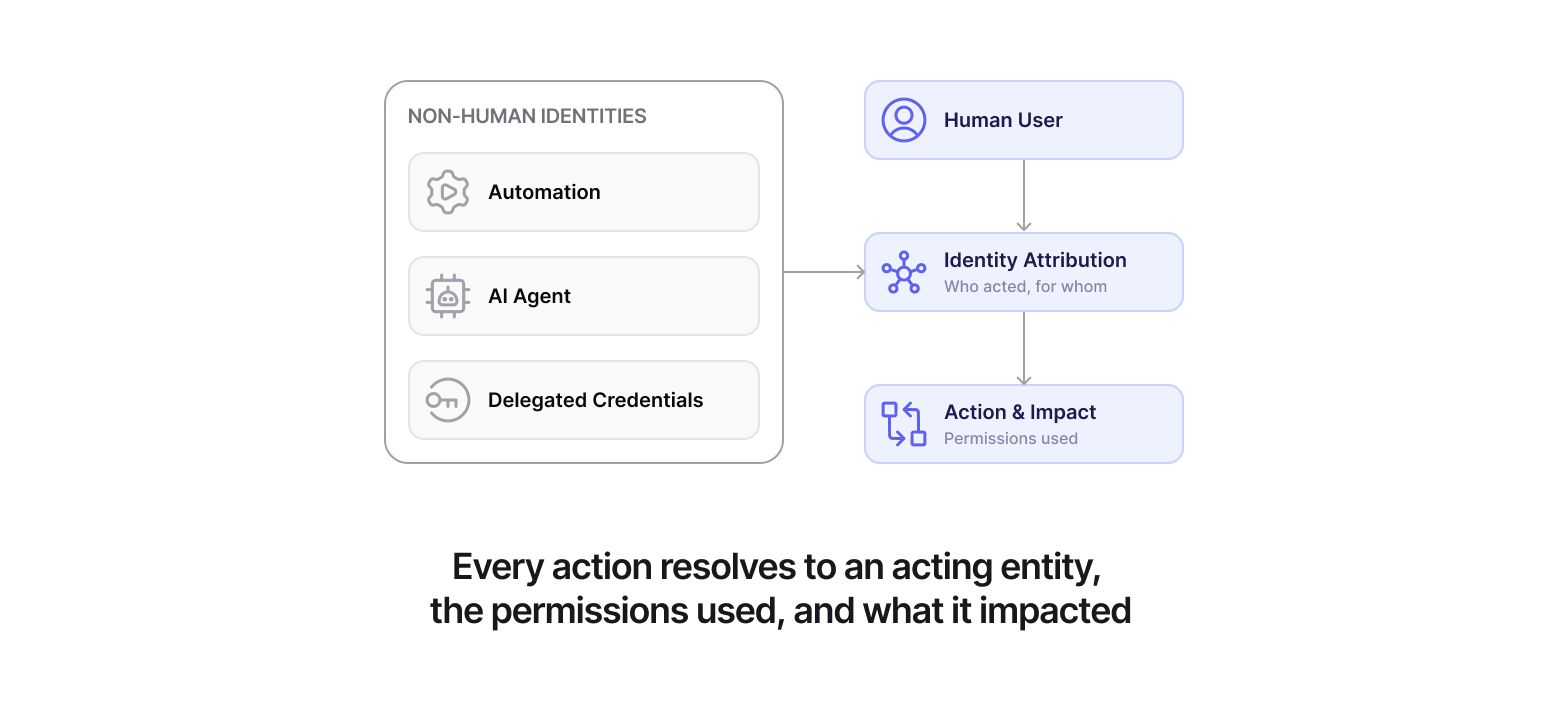
This category is already showing up in how engineering teams operate and how data is accessed. If your SOC can’t separate human-driven actions from delegated ones with a clear evidence trail, your detection and containment are delayed and have after-the-fact interpretation.
An answers-first approach treats “who acted” and “on whose behalf” as investigation primitives, not as an analyst guess.
What makes Exaforce different in a way security leaders can validate
A lot of platforms are using “AI” as a surface feature. Security leaders don’t need another summary box. They need an operating model that consistently produces decisions and evidence.
The Exaforce model is simple: correlate security-relevant data so every alert arrives already triaged, with evidence attached. Detection, triage, investigation, and response happen in one platform. The result is broader coverage, more accurate answers, far less work, and lower total cost.
Most SIEMs just store your logs. They leave the correlation, the investigation, and the staffing to you, or to an MSSP that under-delivers. Exaforce continuously correlates all of your security data (logs, configuration, identity, and resources), so every alert arrives already triaged, with the evidence attached. Detection, triage, investigation, and response run on one platform. You get broader coverage, more accurate answers, far less work, and lower total cost, and you can run it yourself or have us run MDR for you.
Exaforce is an agentic SOC platform, and for most customers, their primary SIEM and their MDR. Exaforce is built around delivering evidence-backed answers, not more queries. Instead of pushing analysts to pivot between systems and manually assemble narratives, Exaforce connects activity, identity, access, and change into investigations that are structured to answer the questions leaders care about most: what happened, what it means, the blast radius, and the next action.
Take the SIEM Possible Challenge with Exaforce
The SIEM possible challenge is a leadership challenge. Leaders are accountable for decisions, and decisions require answers that can be defended. The questions practitioners ask every day make that clear: what’s the blast radius, what changed, what’s being shared, who has access, what’s inherited, and what acted on behalf of whom.
Exaforce is built to make those questions answerable as a default workflow. That’s why we say “start with answers, not queries”. If your SOC can’t consistently deliver answers with evidence under time pressure, that’s not a people problem. It’s a platform problem.
And it’s solvable - with Exaforce.