
A SIEM that doesn’t make you do all the work
Exaforce automates the data engineering, correlation, and investigation that legacy SIEMs leave to your team. Humans and AI agents start with answers, not queries. Broader coverage, less work, lower TCO.
Challenges with legacy SIEMs
Cost before and after storage
Legacy SIEMs hide their true cost across data pipeline engineering, redundant query compute, and 30 to 60 minutes of manual investigation per alert, with the analyst labor cost almost always exceeding the infrastructure bill.
Architecture hampering the AI-driven SOC
AI agents are only as effective as the data they reason over, and legacy SIEMs feed them the same raw, uncorrelated events that bottlenecked human analysts.
Every investigation starts from zero
Legacy SIEMs store events but correlate nothing, forcing analysts to manually assemble context from scratch on every alert, regardless of how much data or experience the team has.
Tool sprawl without resolution
A typical stack layers SOAR, UEBA as a paid add-on, and AI triage bolted on top. Each tool compensates for what SIEMs can’t do, adding integration burden, another vendor, another line item. The core architecture remains reactive.
How Exaforce goes beyond the legacy SIEM
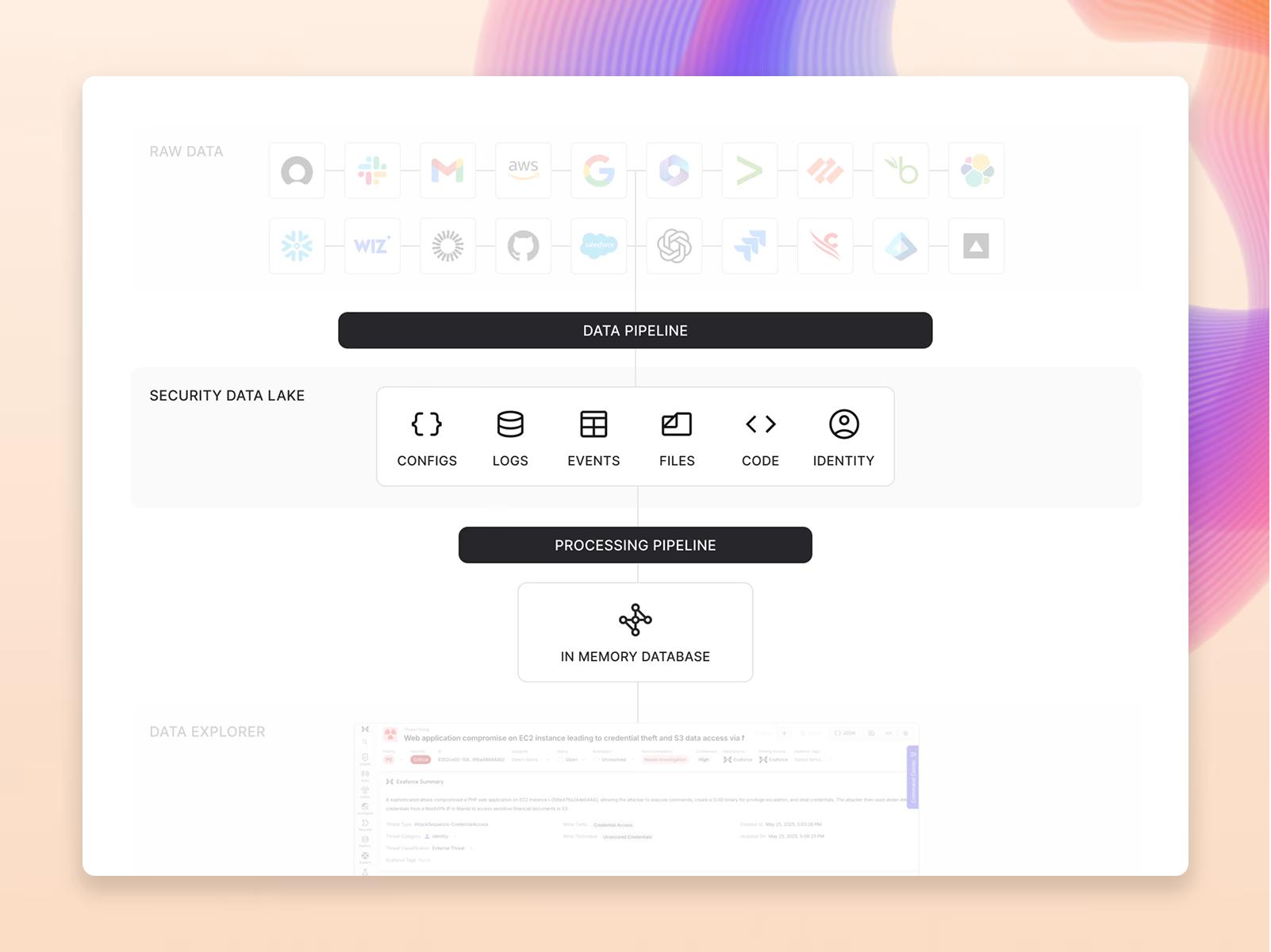
Ingest everything without the SIEM price tag
All data is ingested without sampling or filtering, automatically tiered across analytics and data lake storage, with parsers built in and your existing SIEM queries preserved so SIEM costs taper naturally over time.
Ingest everything without the SIEM price tag
All data is ingested without sampling or filtering, automatically tiered across analytics and data lake storage, with parsers built in and your existing SIEM queries preserved so SIEM costs taper naturally over time.
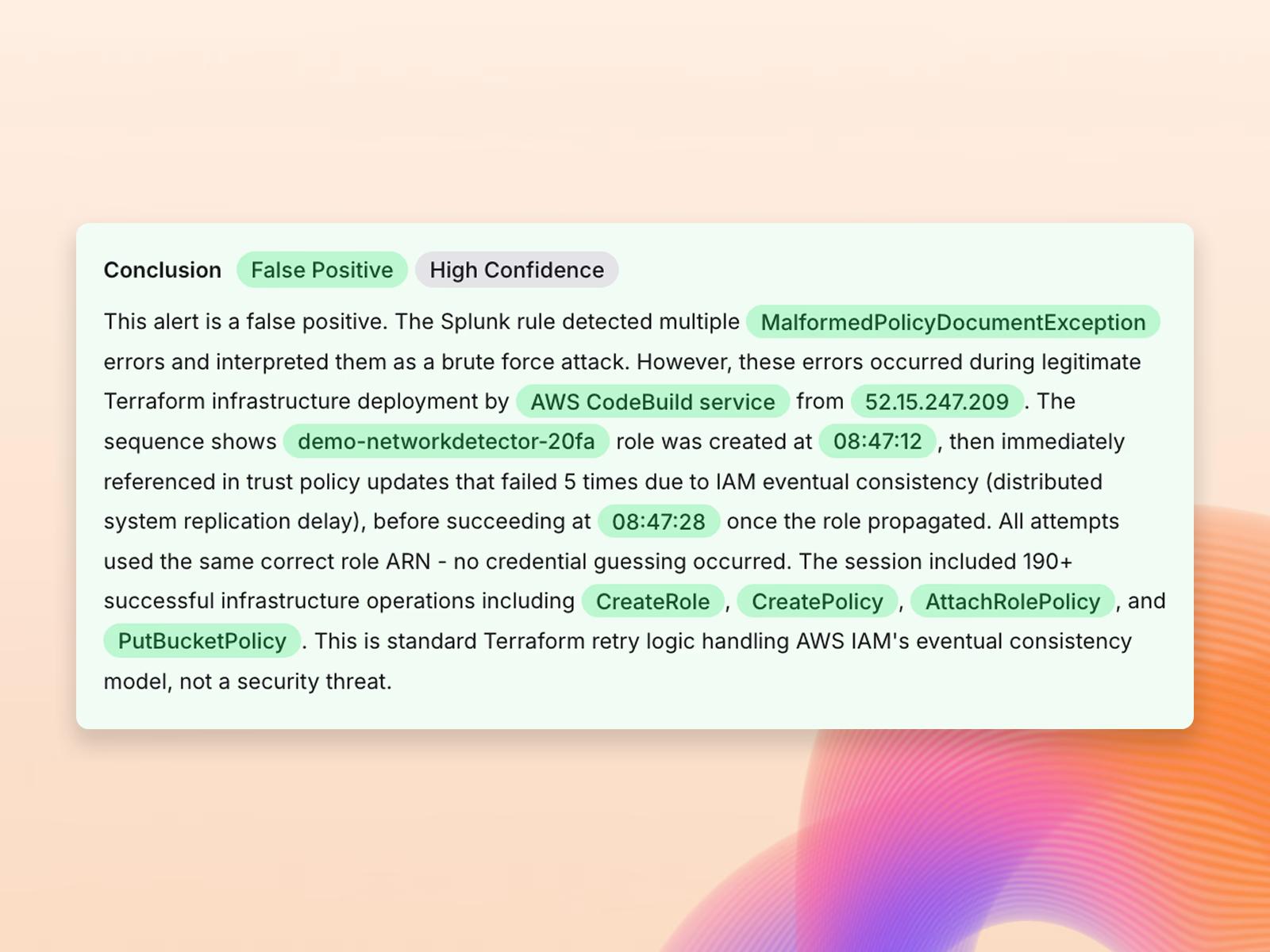
Alerts that arrive with the investigation done
Exaforce pre-computes correlations across 90 days of history so that when an alert fires, both human analysts and AI agents see the complete picture immediately rather than starting from scratch.
Alerts that arrive with the investigation done
Exaforce pre-computes correlations across 90 days of history so that when an alert fires, both human analysts and AI agents see the complete picture immediately rather than starting from scratch.
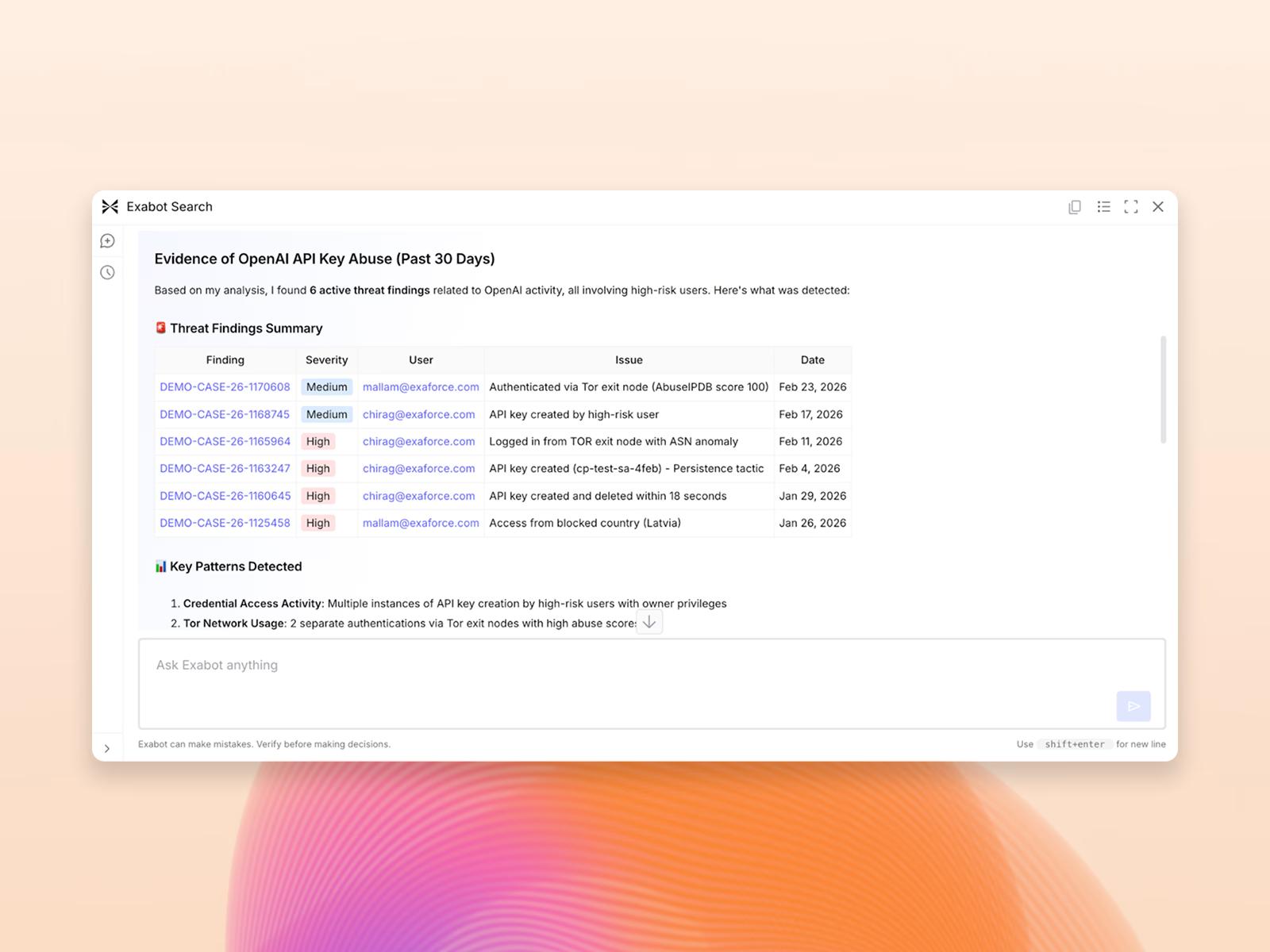
Hunt with questions not queries
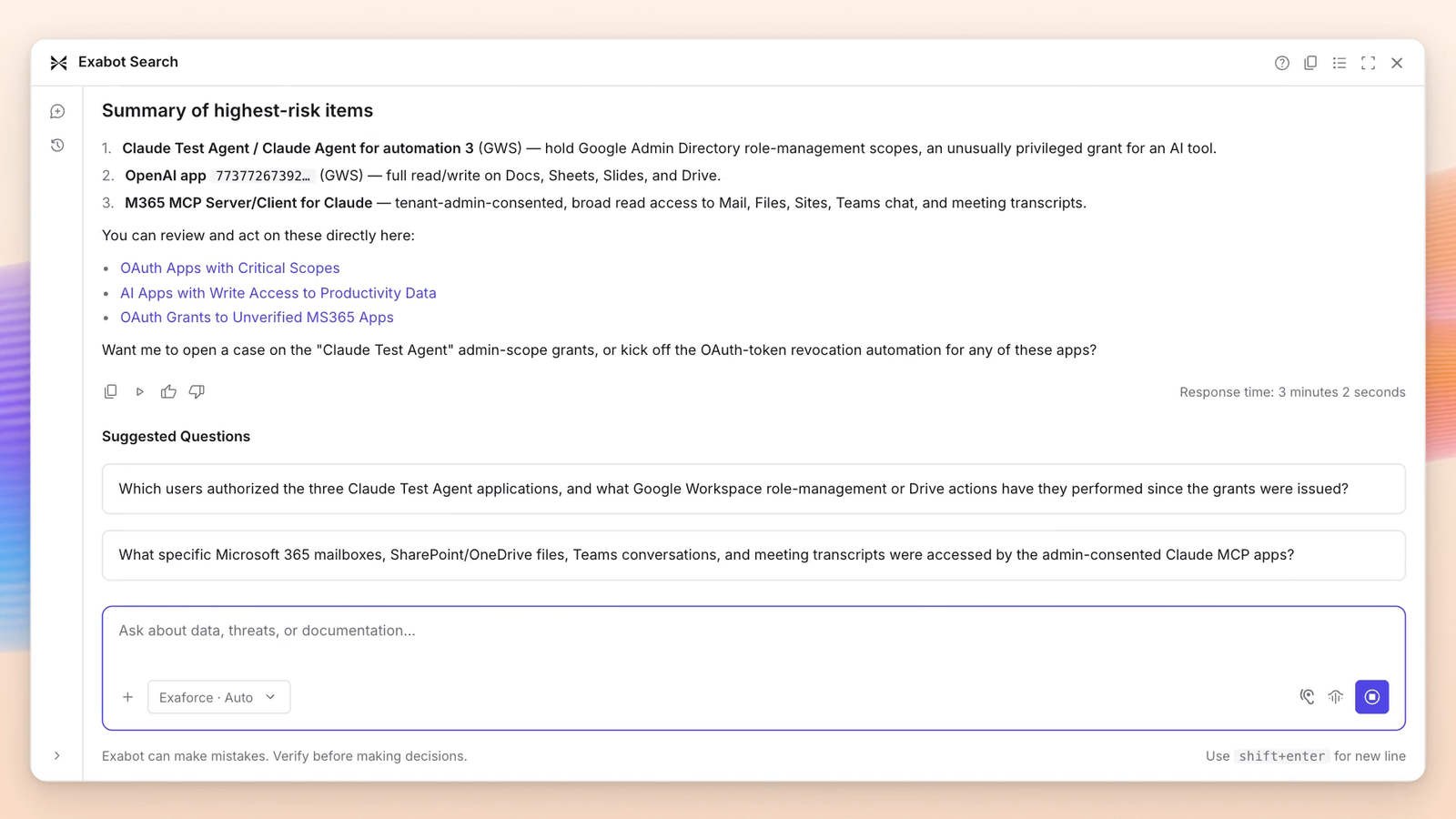
Exaforce lets analysts start any investigation or threat hunt in natural language, and because data is already normalized and correlations are pre-computed, the platform assembles answers across every connected source.
Hunt with questions not queries
Exaforce lets analysts start any investigation or threat hunt in natural language, and because data is already normalized and correlations are pre-computed, the platform assembles answers across every connected source.
One platform, not five
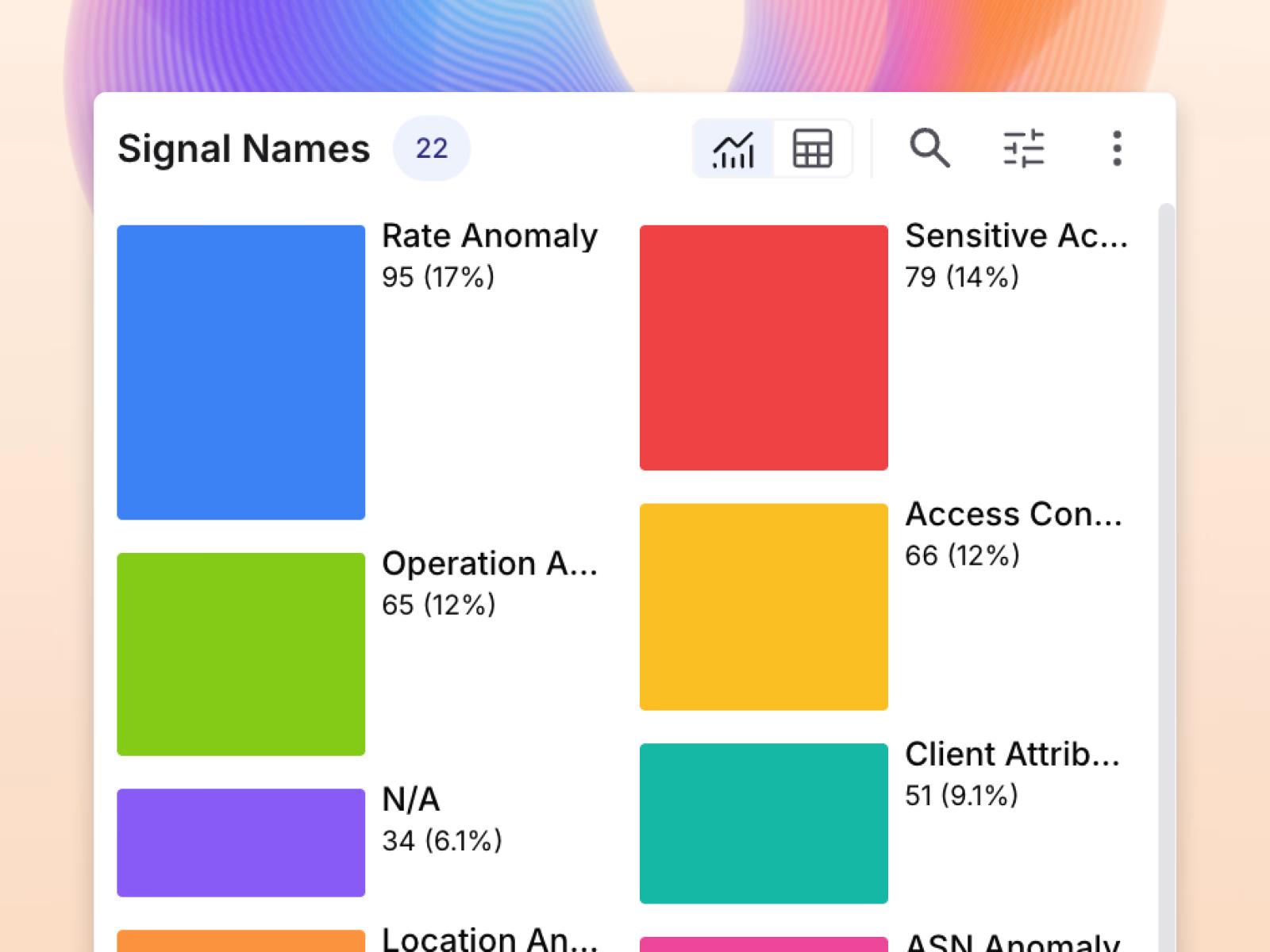
Detection, triage, investigation, response, and behavioral analytics in a single platform. No separate SIEM, UEBA, ITDR, and SOAR. No third-party pipeline tool for parsing and routing. Fewer tools, lower total spend, and less integration overhead.
One platform, not five
Detection, triage, investigation, response, and behavioral analytics in a single platform. No separate SIEM, UEBA, ITDR, and SOAR. No third-party pipeline tool for parsing and routing. Fewer tools, lower total spend, and less integration overhead.
Gartner Peer Insights
Exaforce has materially improved our Detection and Response operations. The platform combines strong out-of-the-box integrations, with AI-driven investigations that automatically enrich, correlate, and reason over alerts.

Healthcare and Biotech
Frequently asked questions
Do we lose historical log data when we switch?
Does Exaforce replace our SOAR as well?
How does Exaforce handle compliance logging requirements?
How is UEBA licensed?
How long does it take to replace a SIEM with Exaforce?
How long does migration take?
What happens to our existing detection rules?
Related resources
Evaluate your AI SOC initiative
A maturity mapped question framework to benchmark AI SOC platforms on detection, triage, investigation, response, and service quality.
Webinar: “What is AI SOC” Anyway?
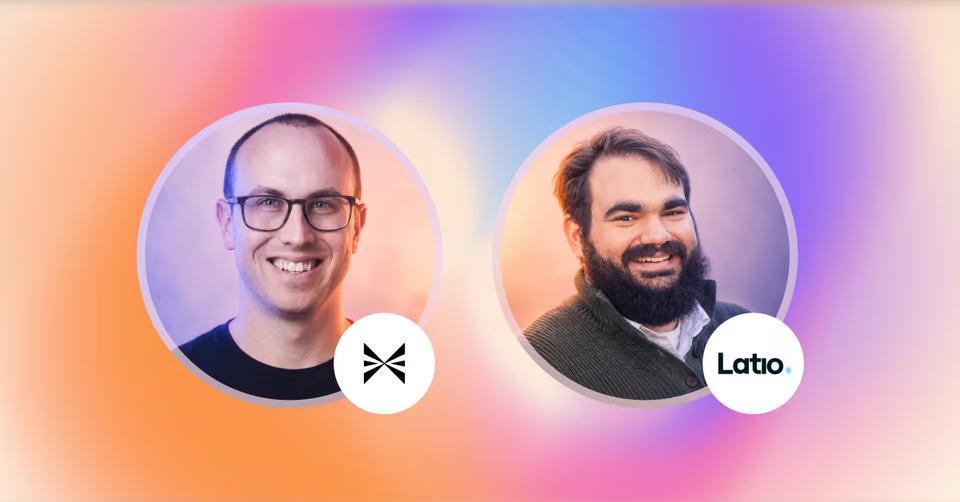
Cutting through the hype with James Berthoty (CEO & Principal Analyst, Latio) and Taylor Smith (Director of Product, Exaforce)
Latio AI Security Market Report 2025
Get actionable insights about the latest developments in AI security. Written for both security leaders and engineers, this report covers the state of the market, leading use cases, and what vendor innovations.