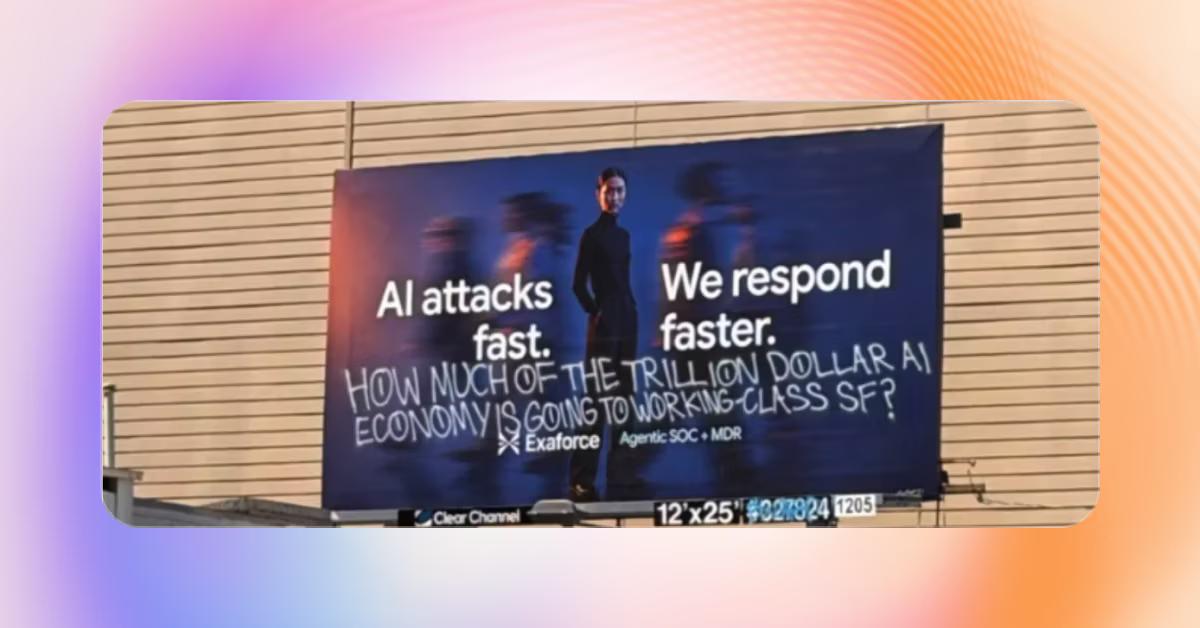
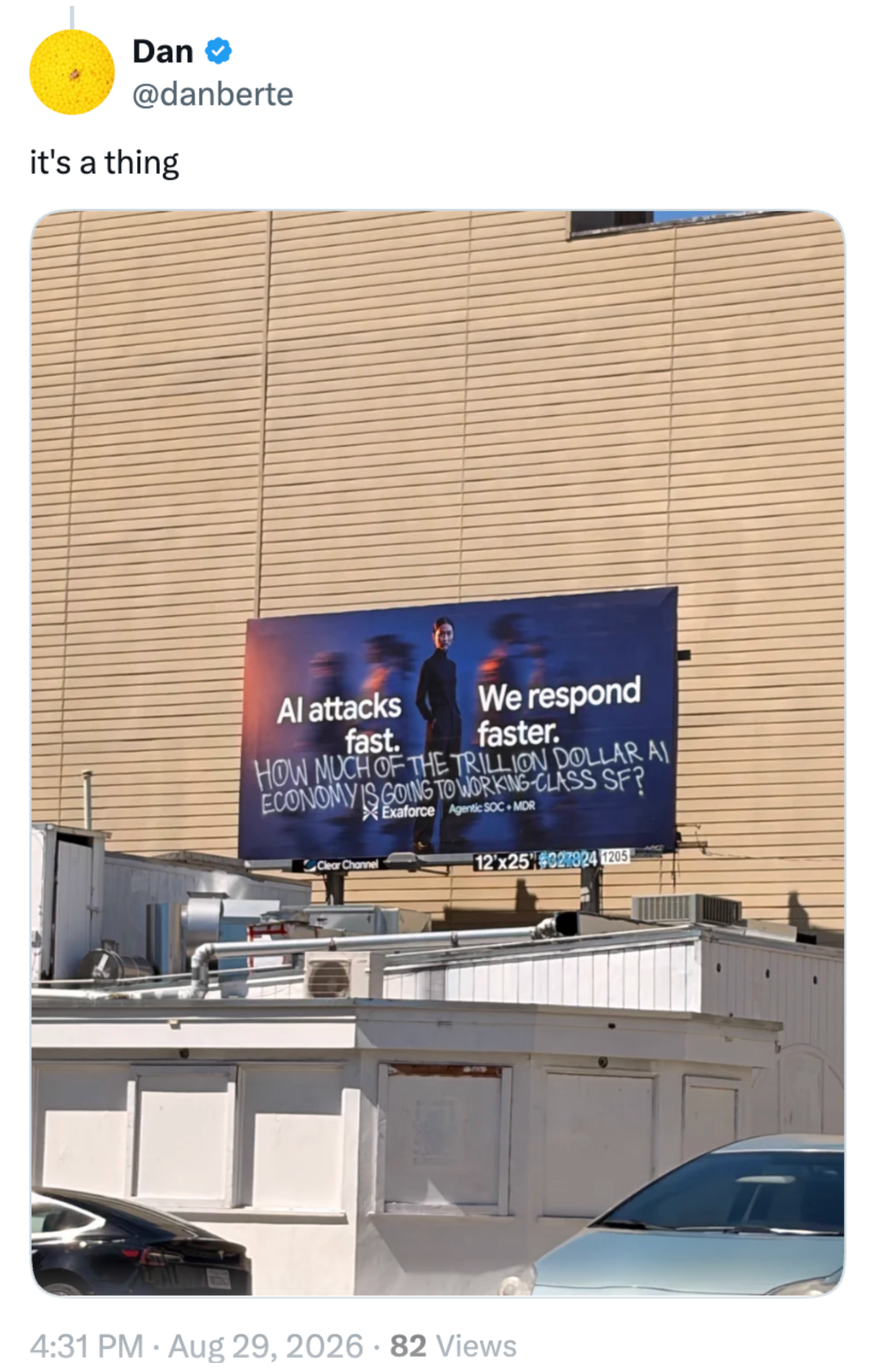
この夏、サンフランシスコの28か所で、エクサフォース初の屋外広告キャンペーンを展開しました。わずか数日で話題になりましたが、その理由は私たちがデザインした広告そのものではありませんでした。何者かが私たちの広告看板の一つによじ登り、見出しよりも大きな文字で、AI関連の広告について思ったことをそのまま書き込んでいたのです。別の広告看板では、「AIによる攻撃は速い。私たちはさらに速く対応する」というコピーの下に、こんな問いが書き加えられていました。「1兆ドル規模のAI経済のうち、サンフランシスコの労働者階級にはどれだけ還元されるのか?」
まずお伝えしておきたいのは、私はこのことに腹を立てていないということです。エクサフォースのメンバーも、誰一人として腹を立ててはいません。こうした反応が生まれるのも理解できるからです。「AI」を前面に掲げ、多額の費用をかけて街に向けてメッセージを発信する企業。それを見た彼らは最も重要な問いを投げかけました。「これは一体、誰のためのものなのか?」この問いを不当なものとして片付けるつもりはありません。それは、考える価値のある問いです。AIは、人々の働き方、企業の事業運営、そして新しいテクノロジーが市場に投入されるまでのスピードを変えています。こうした変化によって誰が恩恵を受け、誰がリスクを負うのか。そして、テクノロジーを開発する側と同様に、その影響を受ける側にも目が向けられているのか。そう問いかけるのは、もっともなことです。
これは、新たなベンダーがSOCに入ってくるたびに、私たちが問いかけることでもあります。そして、小規模企業でセキュリティを一人で担う担当者が、大規模なプラットフォームの導入に伴い、また新たなエージェントを導入することになったときに抱く問いでもあります。
その気持ち、私たちにもよく分かります。
あのスプレーの文字に込められていたのは、はるかに大きな資金力と権力を持つ人々が下す決定の影響を受ける側が抱く感情です。
今まさに人々を狙っている攻撃は、低コストで実行でき、機械の処理速度で仕掛けられています。どの言語でも、もっともらしいフィッシングメールをわずか数秒で作成できます。企業のCFO(最高財務責任者)の声を複製するのも、わずか数分です。企業の外部に露出しているあらゆる箇所を隅々まで洗い出すことも、半日あれば可能です。
こうしたことの多くが容易になったのは、経済の未来を担うものとして売り込まれている、まさにその最先端のAIモデルによるものです。それらを開発するAI研究機関は、これまでに存在した組織の中でも屈指の資金力を持っています。そして、そこでリリースされるものは何であれ、ほかの人々に届くのと同じ日に攻撃者の手にも渡ります。そして、その代償を払うのは、最大規模の企業や最も資金力のある企業ではありません。そうした企業には、十分な人員を備えたセキュリティチームと予算があり、問題が発生すればAI研究機関に直接連絡できる手段もあ流からです。その代償を払うのは、より規模の小さな企業と、そうした企業によって暮らしが支えられている人々なのです。
そして、変化し続ける脅威環境に対処する負担が、巨額のセキュリティ予算と数百人規模のチームを持つ企業だけの問題であってよいはずがありません。
攻撃が実際に発生したとき、その被害を受けるのは最先端のAI研究機関ではありません。被害を受けるのは、Acctonのような企業です。Acctonは、2万人以上の人たちの生計を支えている製造企業です。そこで発生する侵害は、リスク台帳上の単なる一項目ではありません。そこには、人々の暮らしと収入がかかっています。そして、その攻撃は、自宅で過ごす代わりに週末を費やしてアラートをつなぎ合わせていた、一人でセキュリティを担う担当者にも降りかかります。私たちが日々、絶え間なく守っているのは、そうした人々です。スローガンではなく、実際に調査を行う製品によってです。
だからこそ、私たちはエクサフォースをつくりました。
私たちの目的は、セキュリティの専門家に取って代わることではありません。彼らの能力をさらに引き出すことです。セキュリティチームが脅威を調査し、何が起きたのかを把握し、攻撃がさらに深刻化する前に対応できるよう、エクサフォースが支援します。
AIをめぐる議論で、私たちがもっと注目されるべきだと考えているのは、この点です。AIが何を生み出せるかだけでなく、AIによって人々が何を守れるようになるのかということです。
エクサフォースは、あらゆる規模の組織のために存在します。多額の予算と数百人規模のチームを持つ組織のためだけではありません。私たちのお客様は、さまざまな業界にわたっています。製造企業やテクノロジー企業をはじめ、さまざまな企業を経営しています。そうした企業では、セキュリティインシデントの影響はリスク台帳の一項目にとどまりません。
そこから得た気づき
セキュリティの根幹にあるのは信頼です。そして今、その信頼は揺らいでいます。AIによって、価値あるものを生み出すことが容易になる一方で、被害をもたらすことも容易になっており、その両方が同時に起きています。AIを開発する企業だけでなく、その他の人々にとってもAIが有益なものとなるためには、その影響を受ける人々を守ることを後回しにはできません。それを最優先にしなければなりません。
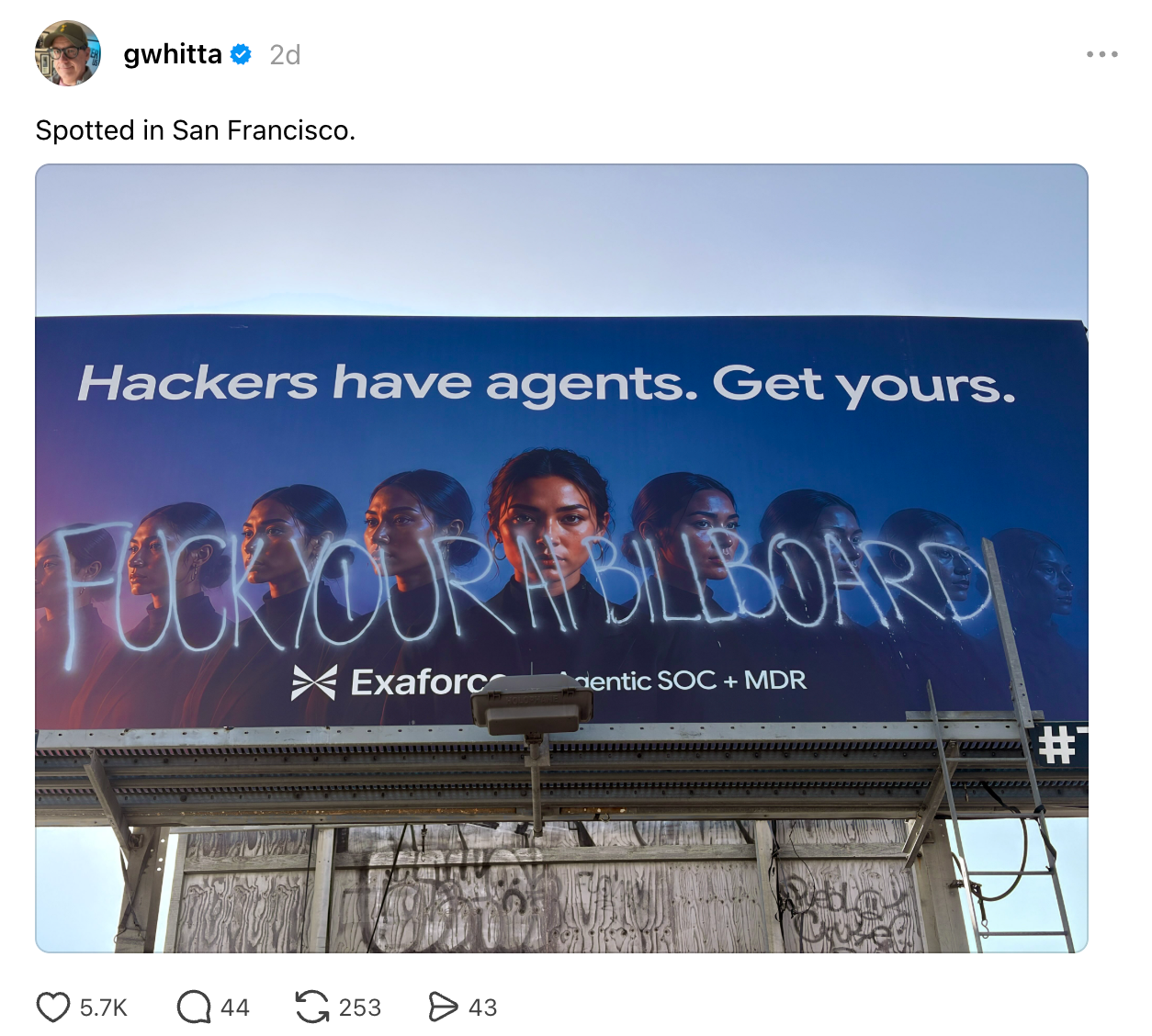
私たちのビルボード広告に落書きをした人も、午前2時にインシデント対応にあたるセキュリティ担当者も、この業界に求めているものは同じです。それは、約束ではなく、確かな証拠です。私たちのビルボード広告には、「AIによる攻撃は速い。私たちはさらに速く対応する」と書かれていました。その下には、「1兆ドル規模のAI経済のうち、サンフランシスコの労働者階級にはどれだけ還元されるのか?」という問いが書き加えられていました。
もっともな問いです。そうした人々にただ製品を売るのではなく、確実に守ること。これこそが、私たちが引き受けた役割です。私たちは、攻撃を受ける側にいる人々のために、製品を開発しています。
もしサンフランシスコで広告キャンペーンを計画しているなら、清掃業者の手配は不要です。この街は、あなたのことをどう思っているのかを無料で伝えてくれますし、どんなフォーカスグループ調査よりも率直です。私たちも、清掃の手配はしません。あの落書きは、そのまま残しておくべきです。